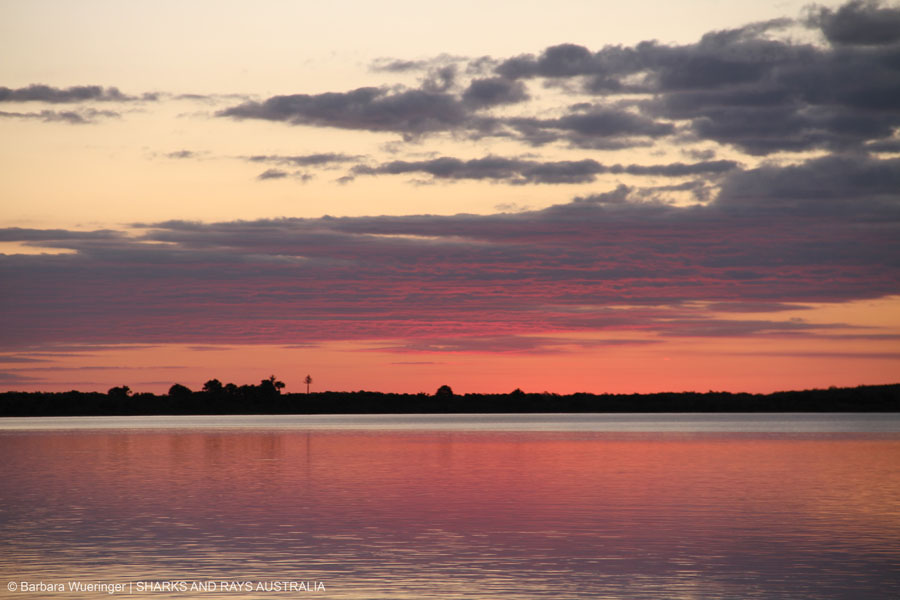
I am sitting in my office in Cairns. When I look out of the window I can see dark clouds hanging in the sky, bringing with them the beginning of the wet season. As our remote field sites can only be accessed by dirt road, these clouds indicate the end of our field season 2016. But what an amazing year it has been!
In 2016, Sharks And Rays Australia commenced expeditions with volunteer field assistants. The response to our call for field assistants at the beginning of the year was fantastic, especially for the fact that this was our first year. People from all over Australia joined us in the field, many of whom were biologists.
We have also been joined by Indigenous Rangers in the field. SARA is now collaborating with five Indigenous Ranger Groups, and their help in the field is invaluable. These guys know their country like the back of their hand, and helped us overcome the many logistical challenges such as launching the boat in areas where there are no boat ramps. They also know which areas are inhabited by particularly large crocodiles and showed us how to read the depth of the river based on the surrounding terrestrial vegetation. Their interest in sawfishes and our research was also incredible, which is very encouraging. For example, the Kowanyama Land and Sea Rangers joined us in the field and on the boat, and almost every one of the Gangalidda-Garawa Land and Sea Rangers joined our presentation and induction. These collaborations make our work more fun and exciting but they are also important. After all, the majority of Queensland’s rivers in which sawfish are likely still abundant, are bordered by country that is under Native Title claim.
Together, we have discovered many amazing places in the Queensland tropics that are completely off the beaten track. We have commenced our study in seven rivers that all flow into the Gulf of Carpentaria, from near the Northern Territory border in the west to north of Weipa. We have experienced an abundance of wildlife, from swarms of grasshoppers, to snakes crossing rivers, to iconic Australian species such as goannas, kangaroos and emus. Our fieldwork was often done under the watchful eyes of saltwater crocodiles and wedge-tail or white-bellied sea eagles. We rescued blue-tongue skinks and pythons that were sunbaking on the roads, and stood in awe of corypha palms that were in bloom. How I miss sitting by the campfire and listening to the songs of whistling kites.
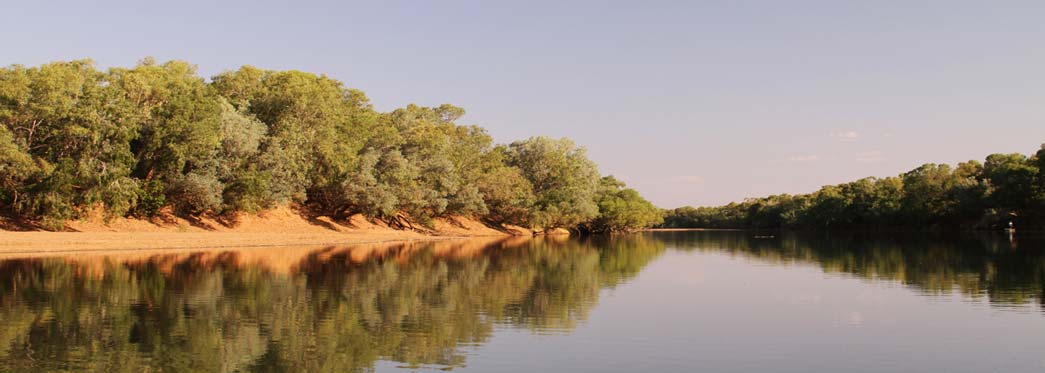
The landscapes we have worked in have been truly stunning and unique. From the endless salt marshes of the Nicholson River to the grasslands that surround the Mitchell River. But we have also seen at first hand the large-scale mangrove die-offs that nobody talks about. It is yet to be seen what these die-offs mean for so many fish and also sawfish that use these submerged forests as nursery grounds.
We also caught, tagged and released 49 elasmobranchs, belonging to seven different species. The most commonly caught sharks were juvenile bull sharks Carcharhinus leucas, with 25 individuals, followed by freshwater whip rays Urogymnus dalyensis, with 6 specimens. Sampling in coastal regions did not get us any of the elusive Queensland sawfish Pristis clavata or Green sawfish Pristis zijsron but we caught, tagged and released five freshwater sawfish Pristis pristis. The diversity of elasmobranch body shapes was reflected in our samples, with juvenile giant shovelnose rays Glaucostegus typus as well as juvenile eagle rays Aetobatus ocellatus being caught. But we have also found evidence of sawfish being finned – a practise that is illegal for anyone in Australia.
As we are not only aiming to understand our study species but also gain a better understanding of the ecosystems they occur in, we also analyse our by-catch, almost all of which was released alive. A total of 276 fish were identified, measured and released! By-catch was clearly dominated by fork-tailed catfish, and within that group Sciades paucus the shovelnose catfish took the lead. These results clearly show that gill nets and drum lines are only selective by size and not by species, but our sampling strategies have also proven to be effective in ensuring that most animals are released alive.
Our field assistants have brought many skills to our expeditions this year, and they have also learned many things, about our research, sawfish, our methods and also about themselves! Spending time in relatively untouched, remote ecosystems often brings us back to ourselves and exposes our strengths and fears. But as a team we can overcome these challenges and learn from each other.
In 2017 SARA will expand even more. We will continue to run our project on the assessment and distributions of sawfish and other sharks and rays in our study area. With this we will continue to collect DNA and stable isotope samples, and we are hoping to explore more rivers.
We will help Mangrove Watch assess the state of the mangrove forests that we work in, and we will commence sampling rivers for environmental DNA (eDNA) of sawfish, in collaboration with Prof. Colin Simpfendorfer from James Cook University.
We also hope to increase our presence in local schools, not only showing kids what we do but also introducing our food web game that will be developed in collaboration with Sharks4Kids.
We are hoping to commence trials for new methods of capturing sawfish. And hopefully SARA can grow, as we will be seeking students to take over some of our projects, like the stable isotope study of river food webs, and our accelerometer study of sawfish behaviours. So stay tuned, join our newsletter and regularly check into our facebook page!
Access the original blog post written for the Save Our Seas Foundation here
By Barbara Wueringer
One of the goals of my project was to find out if sawfish are or have the potential to be a flagship species for the geographical region and ecosystems that they are found in. As this first field season for Sharks And Rays Australia comes to an end, and with it the Project “Sawfishes – spreading the love”, it is time for an assessment. It has been an unforgettable year, and this is what this post is about – the other side of our sawfish research – that, what comes under the umbrella of our flagship species. This post is a tribute to the ecosystems that we have entered over the last year, the people we have met, the animals that we were lucky enough to encounter and some unforgettable moments. Enjoy!
As we came closer to this large puddle that used to be the middle of the road, we saw a soaking wet emu getting up and running away. We had interrupted his bath.
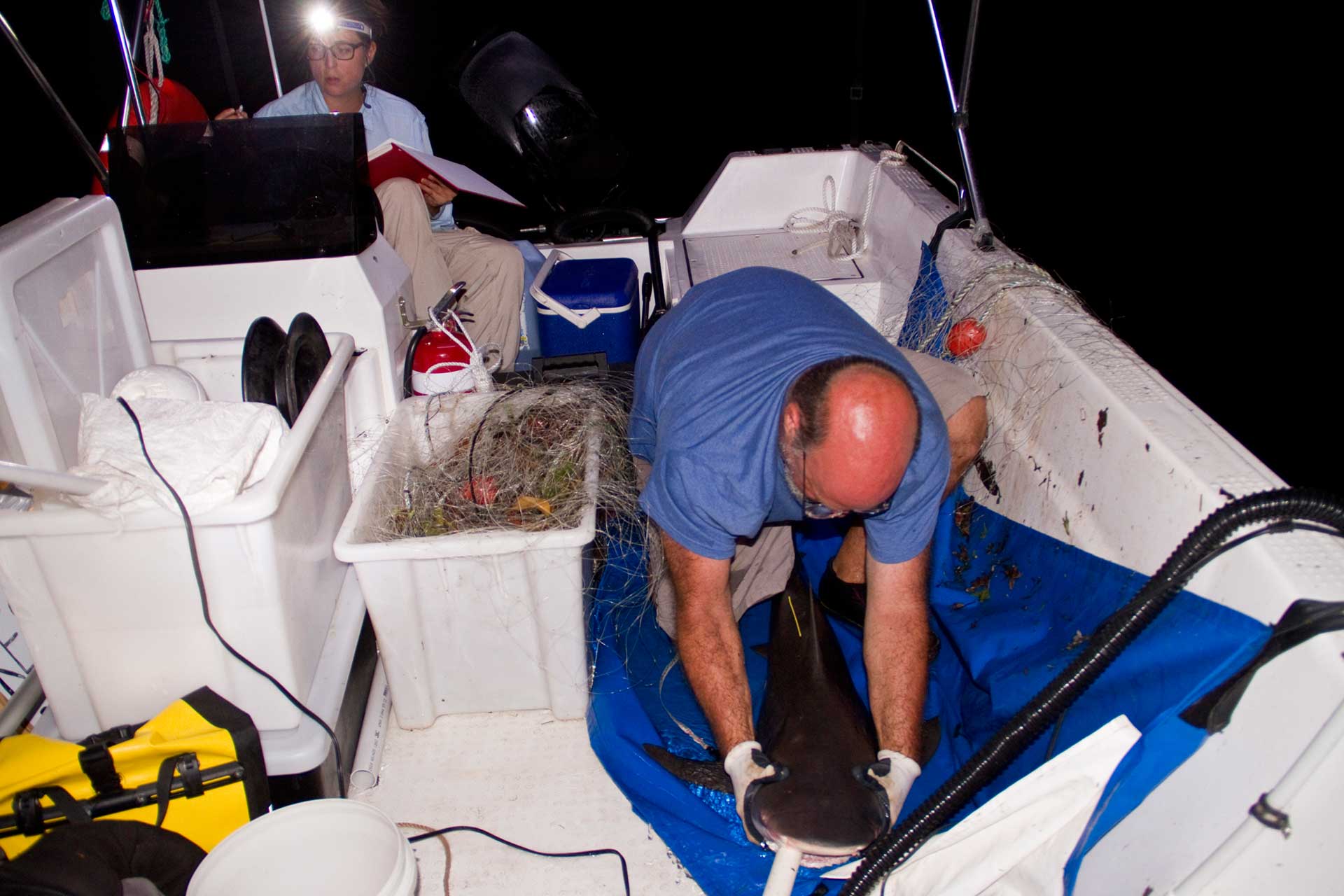
The Kownayama Indigenous Land and Sea Rangers, Traditional Land Owners and SARA field assistants are inducted into the methods used for capturing, tagging and releasing sharks, rays and sawfish for research.
Barbara explains our research and our methods to the Gangalidda-Garawa Rangers of the Carpentaria Land Council Aboriginal Corporation. A sawfish forms part of this groups’ logo, indicating the traditional importance of these animals in the region.
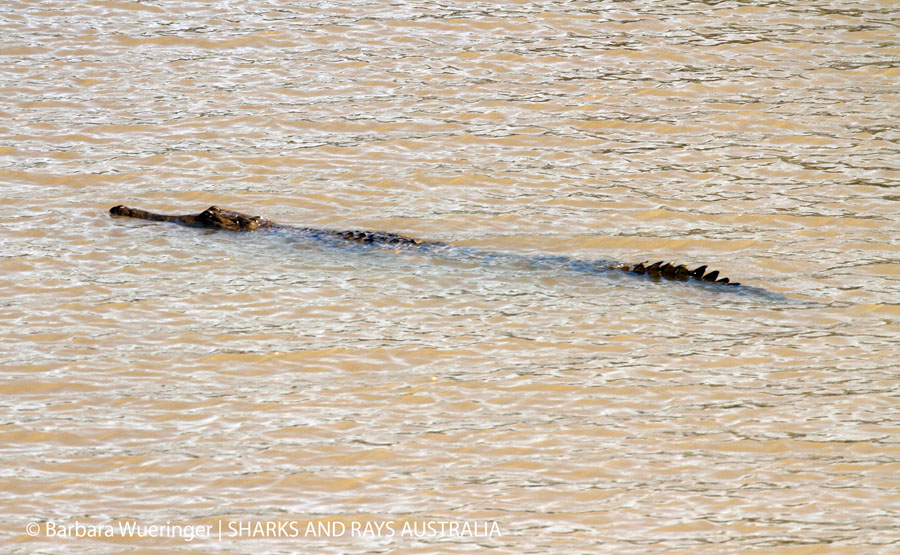
This freshwater crocodile Crocodylus johnstoni was around 2.5 m long.
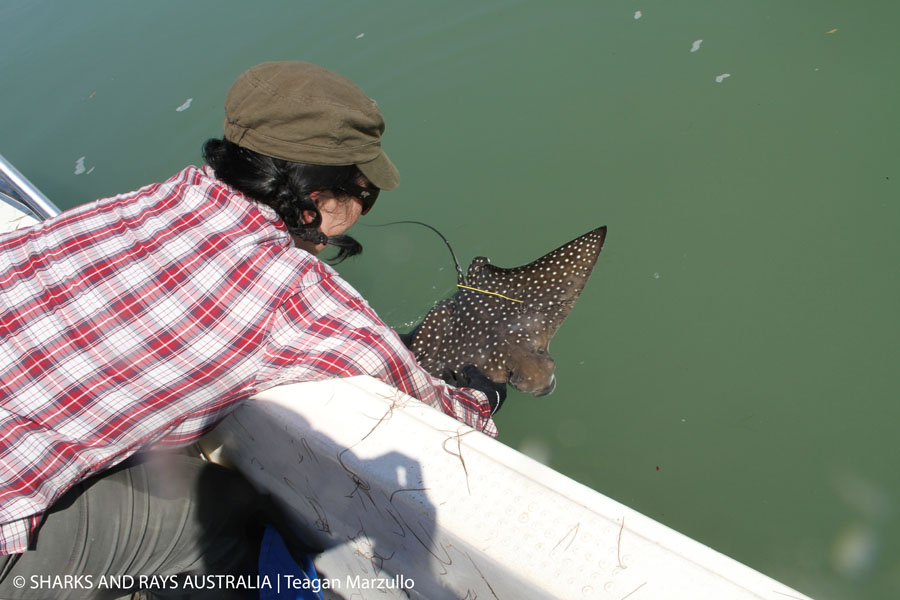
Our volunteer Laura releases a juvenile eagle ray Ateobatus narinari.
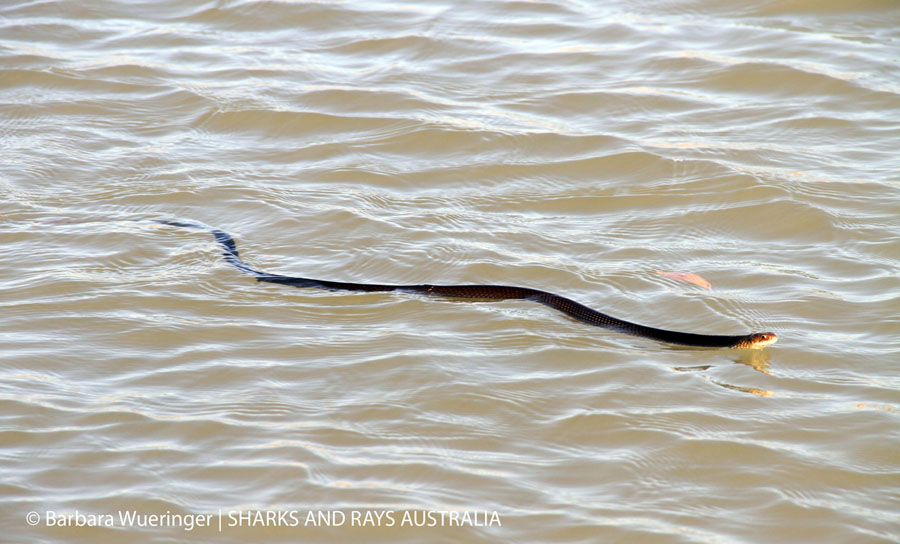
A black whip snake Demansia vestigiata swims across the river and almost into our gill net. A second one was rescued from the net and delivered to the other side of the river.
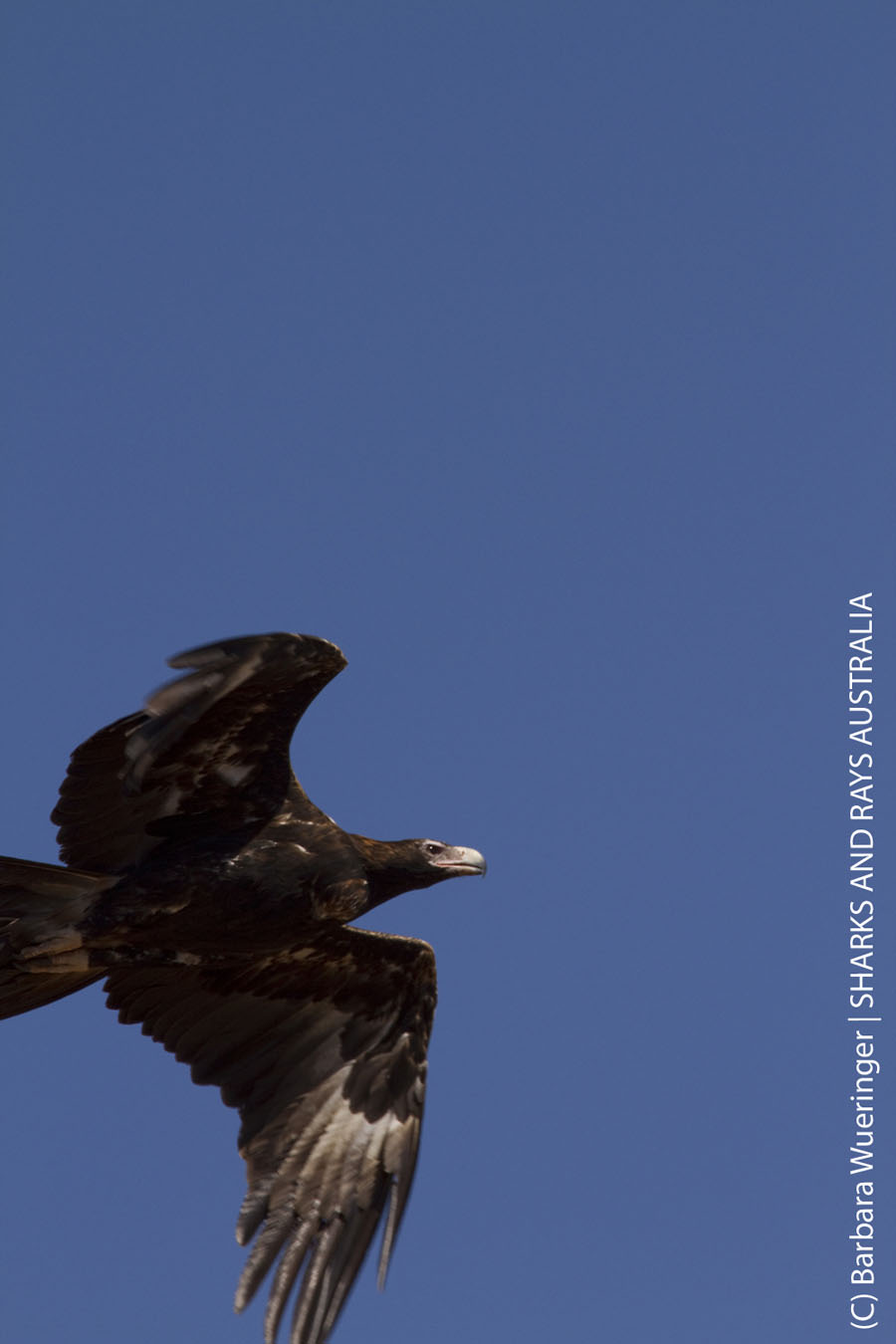
A wedge-tail eagle Aquila audax watches us from above
Every little dot in this image is a locust, and the swarm we drove through in the Southern Gulf of Carpentaria lasted for over 10 km!
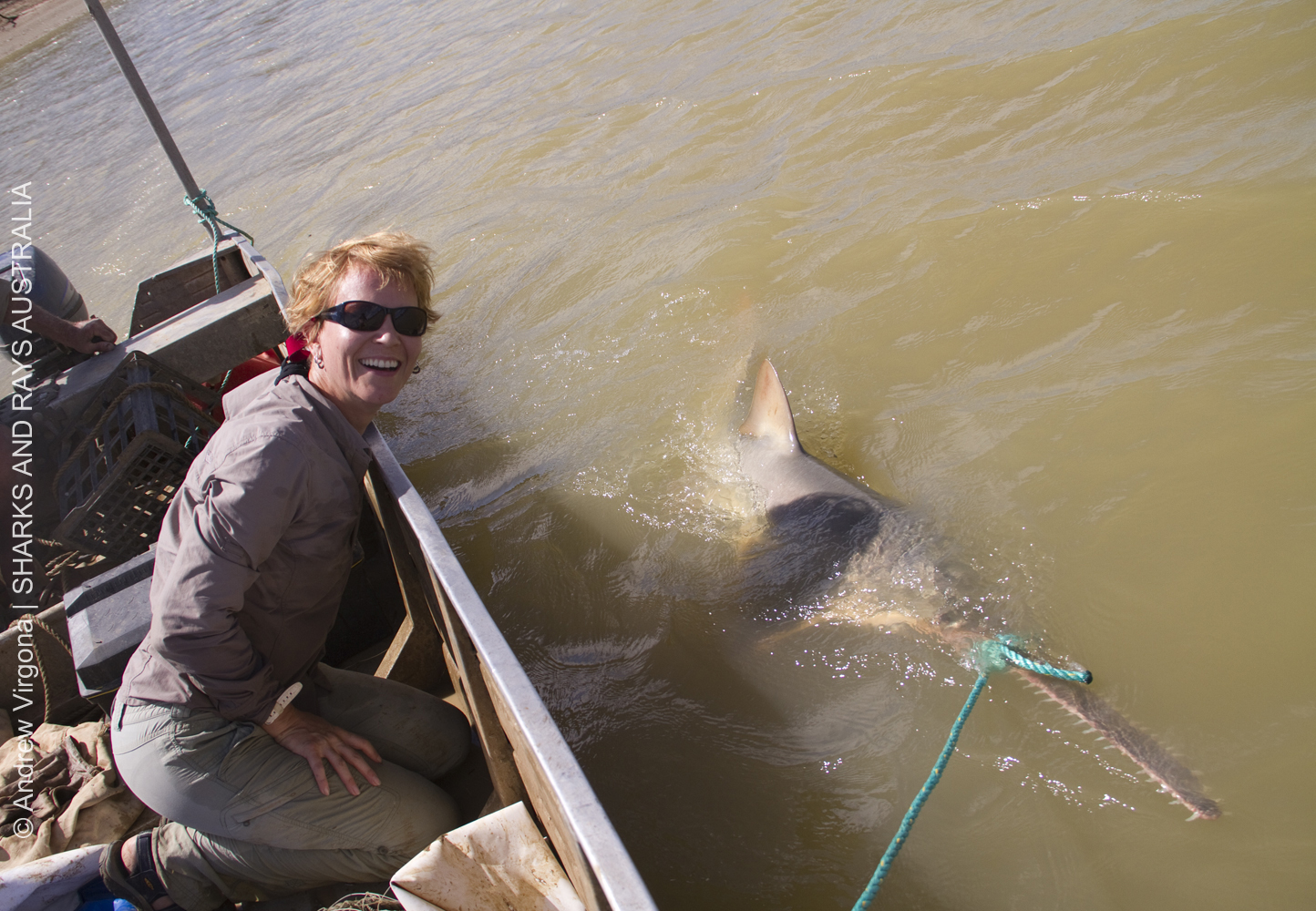
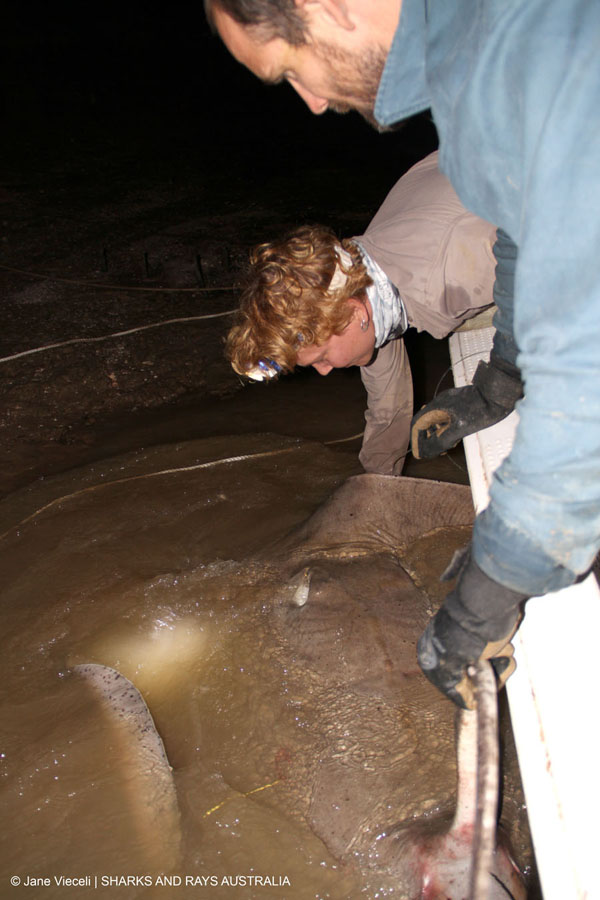
A juvenile freshwater sawfish Pristis pristis is tied to the boat, and slowly brought into shallower water to be worked up.
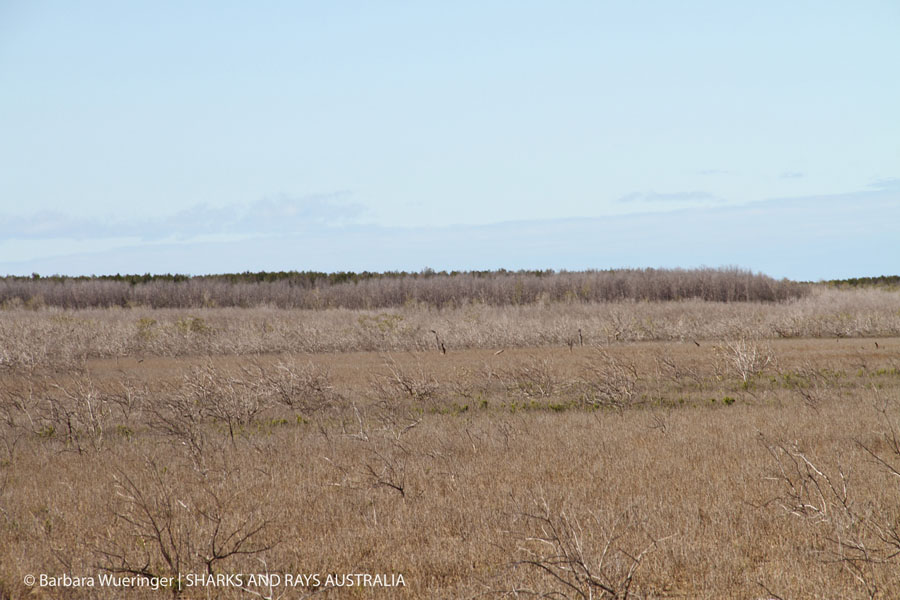
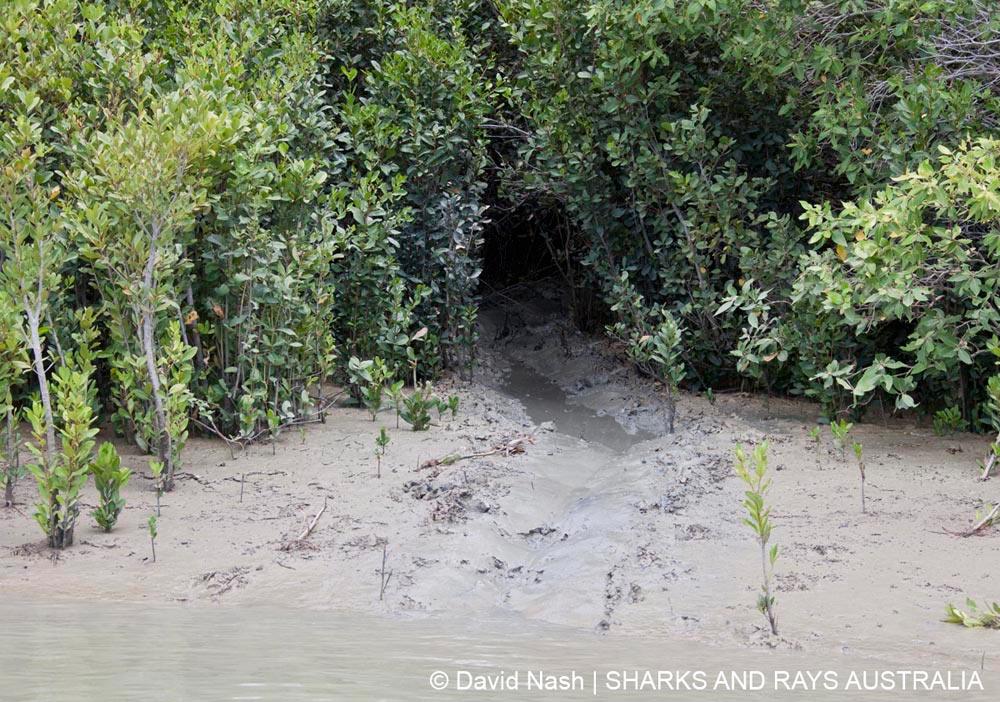
While most people heard about this year’s el Nino event, which killed approximately 22% of the coral cover of the Great Barrier Reef, not so many people have heard about the extensive, and unexplained mangrove die-offs, that happened in the southern Gulf of Carpentaria. Kilometer long stretches of mangroves were affected. What will this mean for the animals that inhabit mangroves, and for the functionality of this important ecosystem?
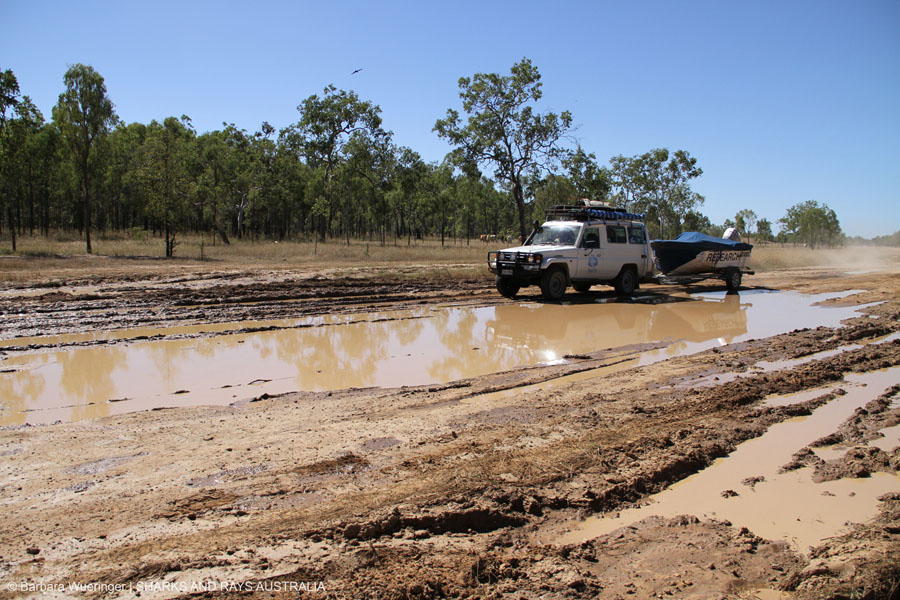
Some of our research sites are hard to reach, as roads are easily washed away. Here we were on our way to Kowanyama.
A freshwater whip ray Himantura dalyensis that we caught measured 120 cm in disk width. Mitchell River, Kowanyama.
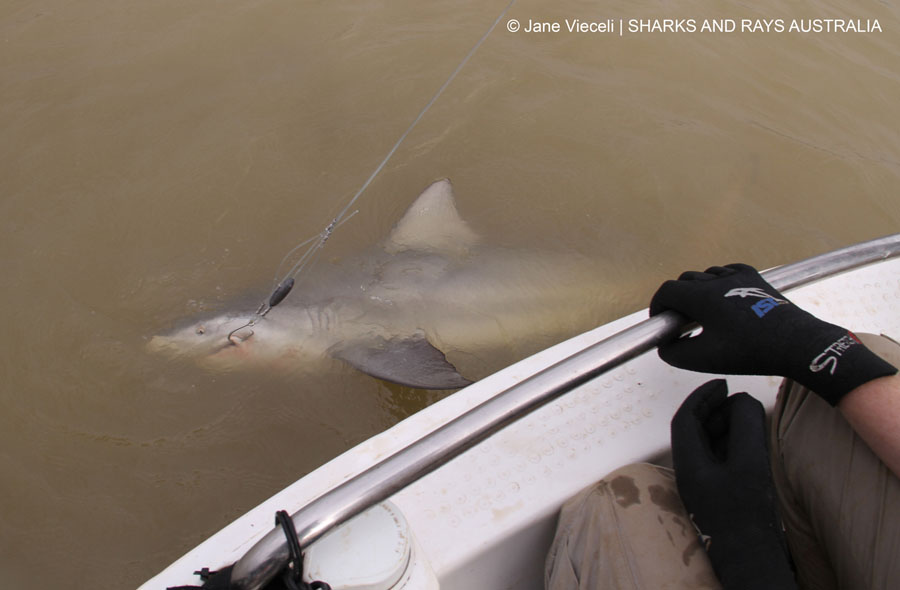
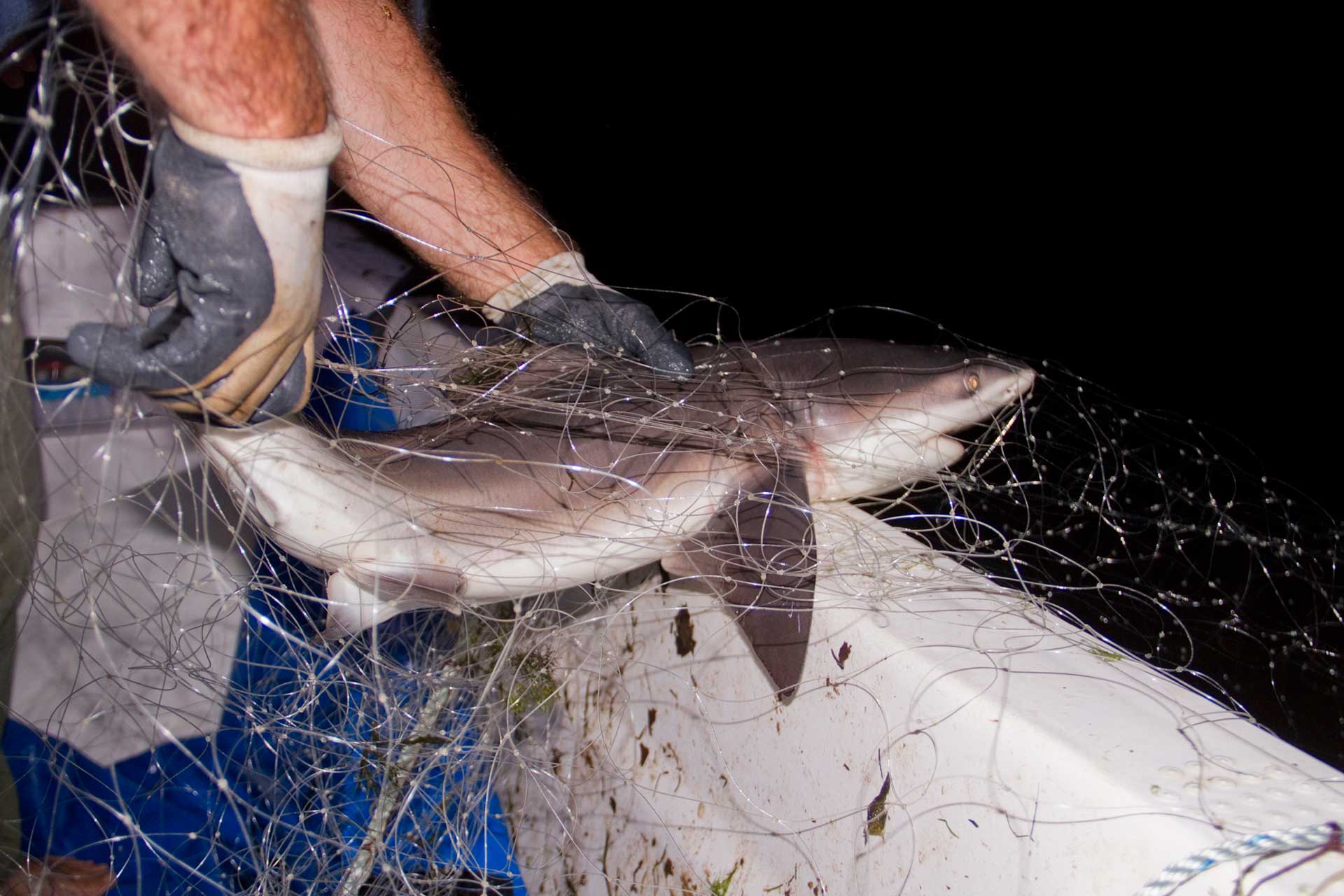
We just caught a bull shark Carcharhinus leucas!
Two white-bellied sea eagles Haliaeetus leucogaster soak up the warmth of the morning sun on a dead cabbage palm Coryphan utan. This palm grows to a height of about 20m, and at the age of 30 – 40 years produces a 5 m high inflorescence that carries about 1m million flowers. After fruiting the plant dies.
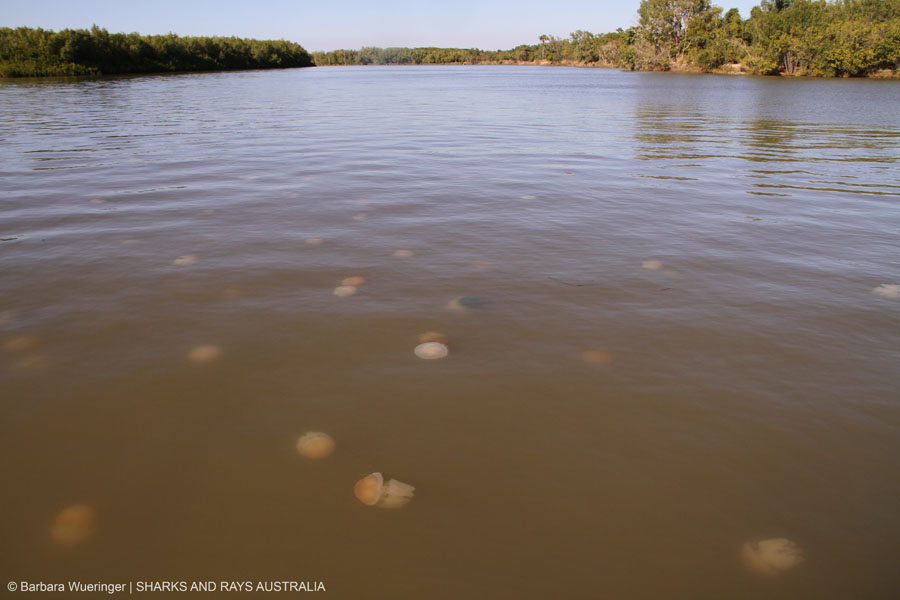
Jellyfish often make their way upstream into the brackish waters of the rivers leading into the Gulf of Carpentaria.
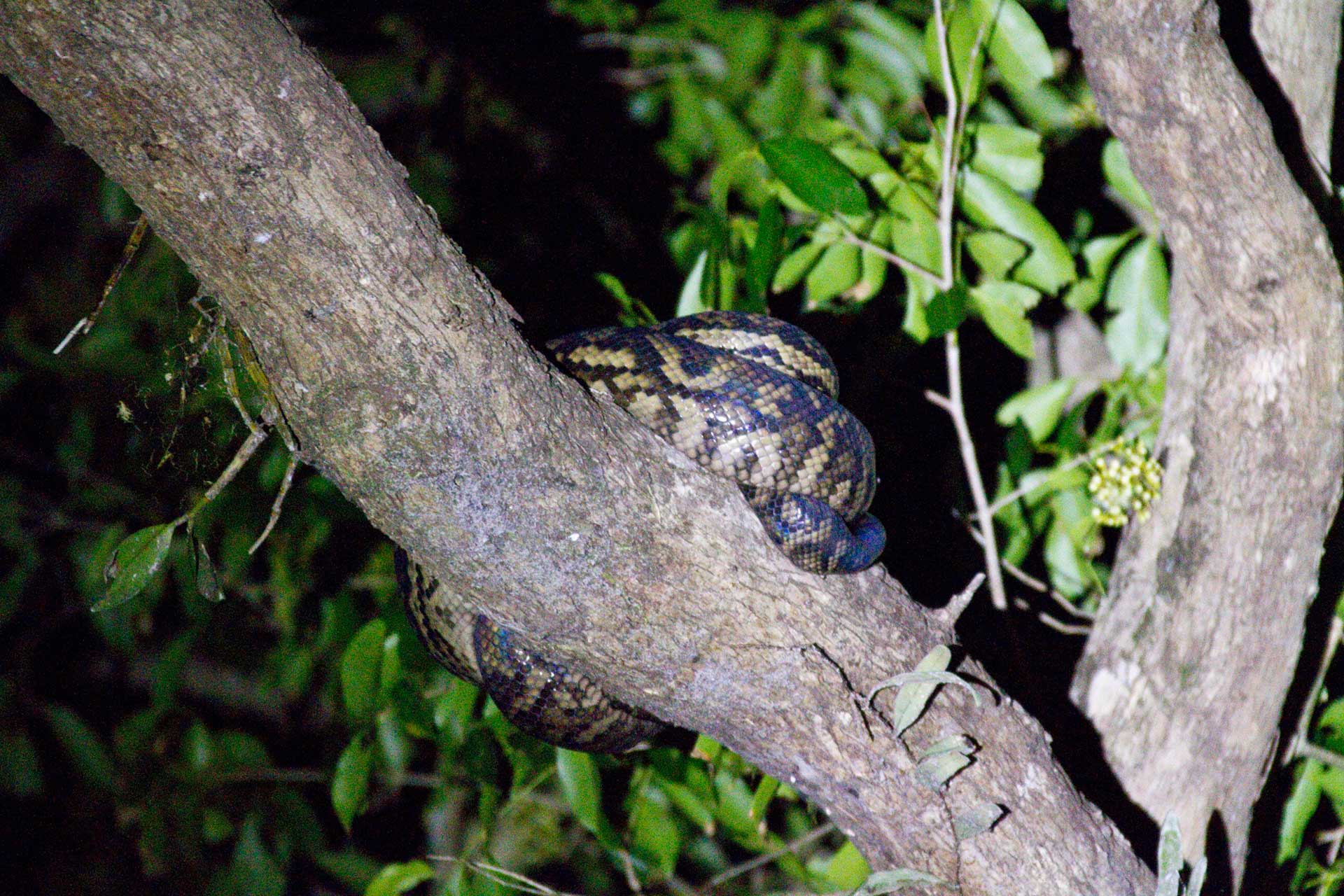
Our volunteer Stuart, who is a professional reptile handler, helped this black-headed python Aspidites melanocephalus across the road to prevent it from becoming road kill
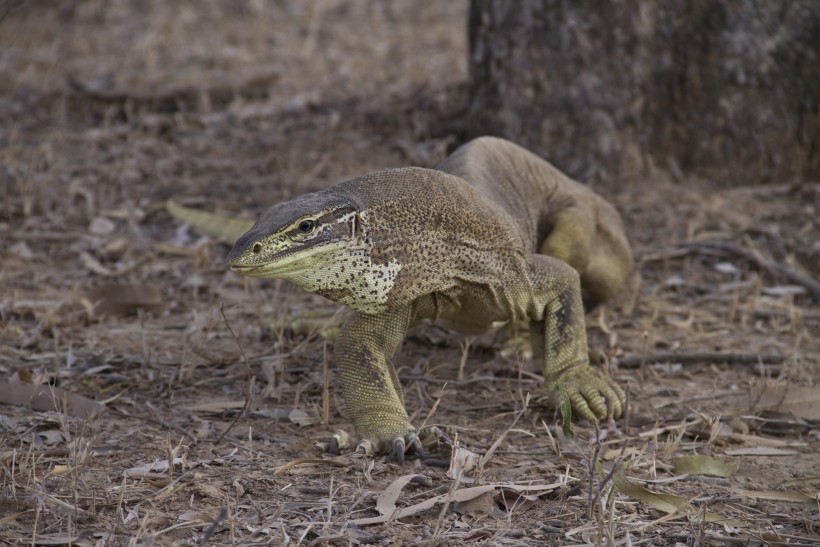
The Yellow spotted monitor Varanus panoptes is widely distributed across Northern Australia. It can attain total lengths of up to 1.4m
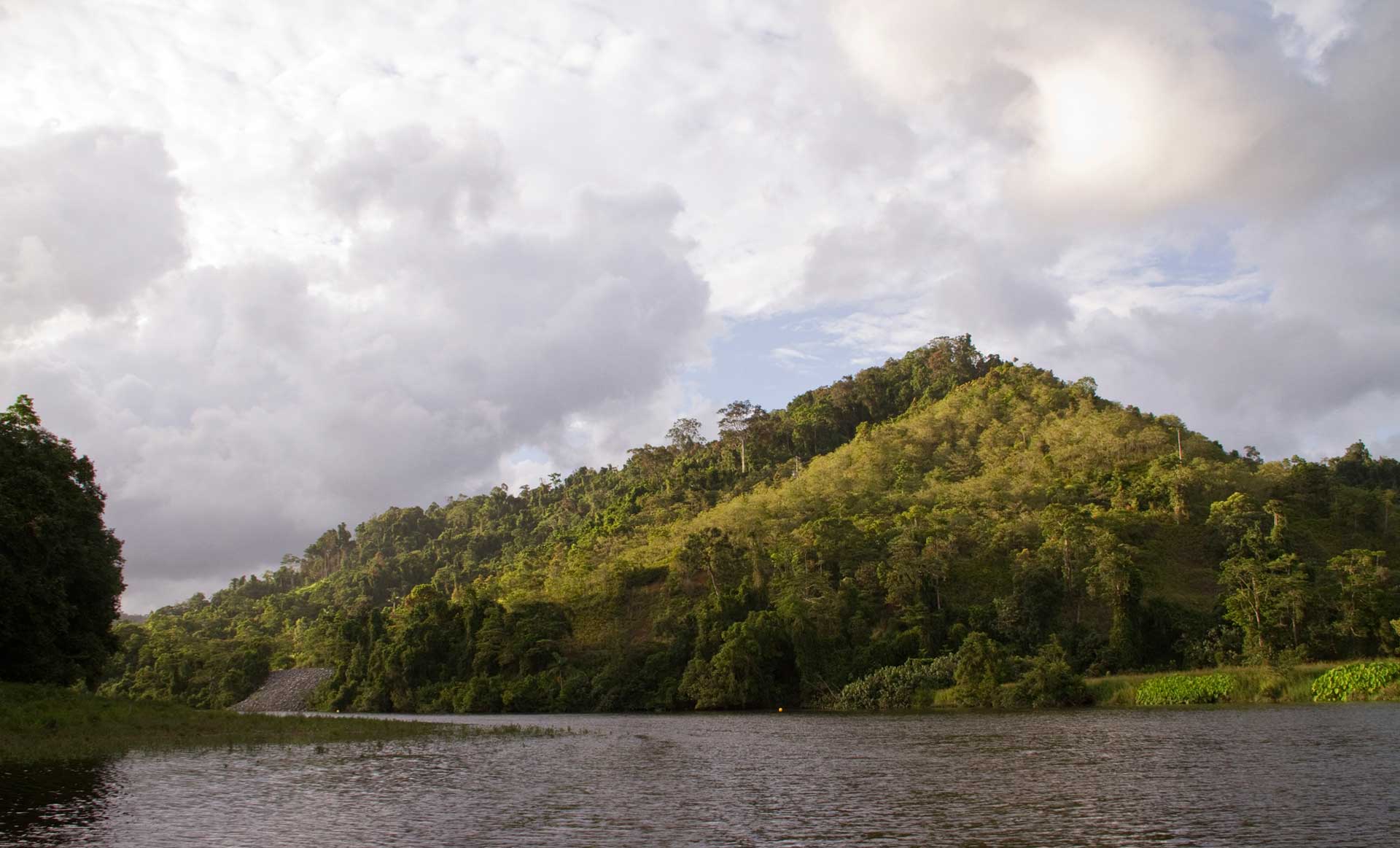
Our search for sawfishes in the waters of the northern parts of Queensland, Australia, certainly takes us into some very special ecosystems. Most are classified as arid bush or grassland, but recently our search took us to the Daintree, a special place that deserves its own blog post.
Australia is the driest continent on earth – nearly 20% of its landscape is defined as desert – and is well known for this fact. The unique landscape of the outback and its drought-adapted fauna, such as termites, kangaroos and emus, are famous and for many people they represent the true Australia. But a large number of these species actually evolved from an ecosystem that is now restricted to the Wet Tropics in Far North Queensland – the Daintree.
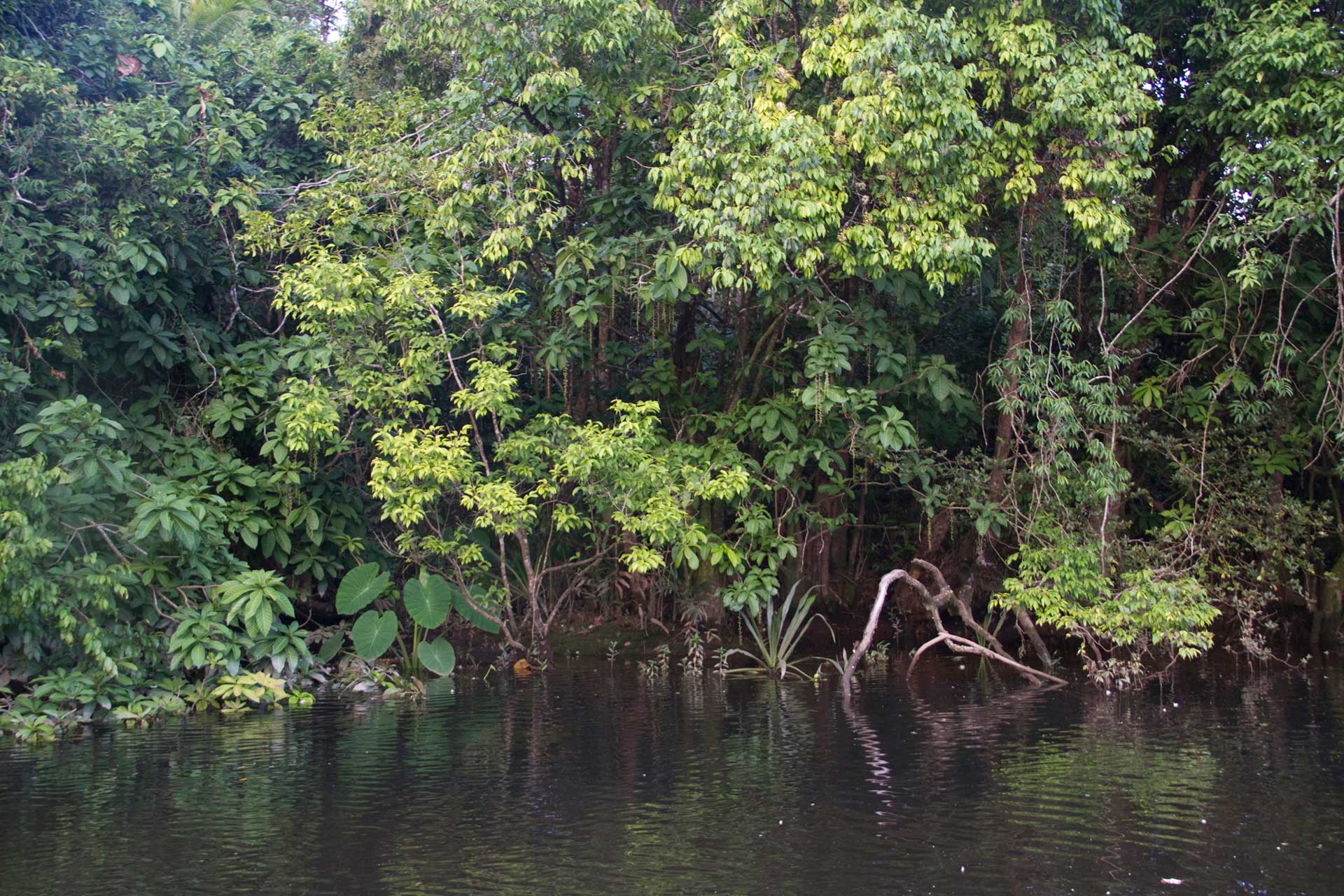
The Daintree is the oldest rainforest in the world. As the climate remained stable over millions of years in this region, many of the native plants have retained their ancestors’ ‘primitive’ characteristics. Of the 28 lineages of near-basal, or ‘primitive’, flowering plants that exist globally, 16 are found in the Daintree. The Daintree is often advertised as the place where the rainforest meets the Great Barrier Reef, so just imagine the species diversity that can be encountered within a few hundred kilometres! Saltwater crocodiles, cassowaries, tree kangaroos – these are only a few of the local flagship species.
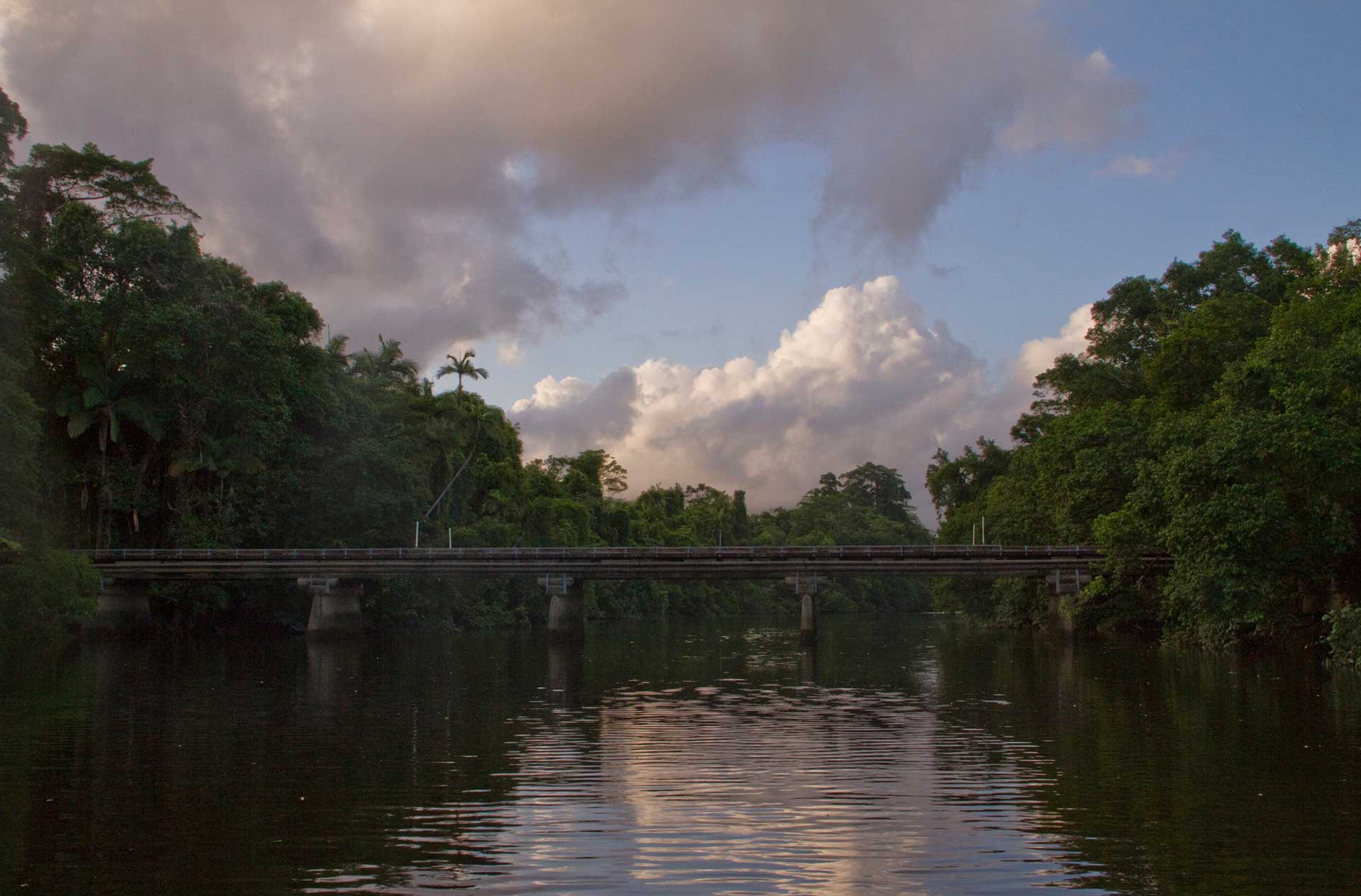
The name Daintree refers not only to the rainforest, but also to the river that flows through it. And this is where we went searching for sawfishes. We spent five days and nights sampling in the river, far inland where the water becomes more and more fresh. On this particular trip we did not catch any sawfishes, but we did tag and release some juvenile bull sharks. Currently, the distribution of sawfishes on the east coast of Far North Queensland and the Cape York region is considered to be patchy, but this may be because so little attention has been paid to it and sampling efforts have been incomplete.
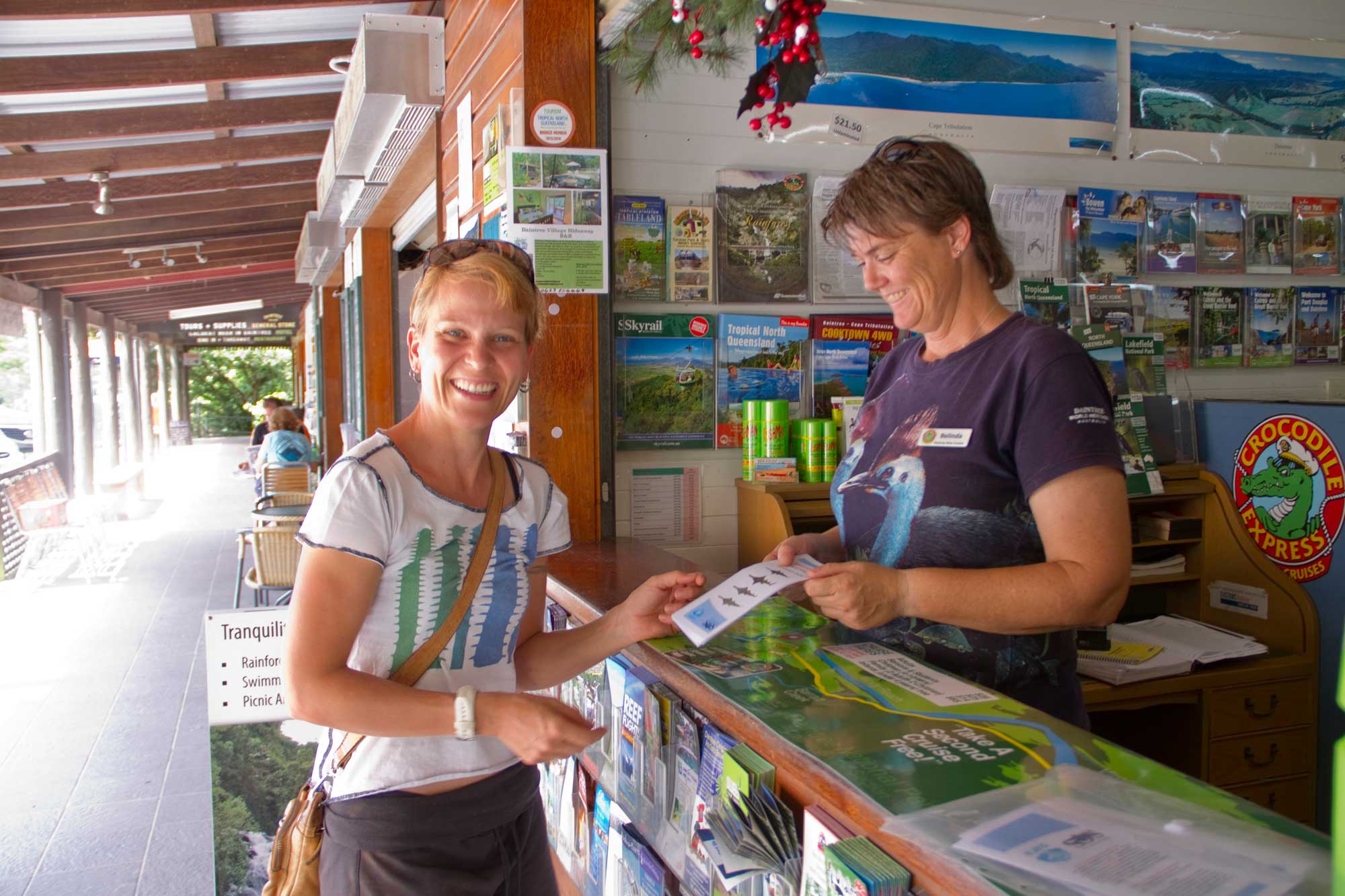
Locals in the tiny village of Daintree were super interested in our work and by the time we launched our boat there were 20–30 people watching us (about 20% of the population!). We also distributed our sawfish ID flyers (adapted from the Sawfish Conservation Society for Queensland; download here). Next time we come back we’ll be sure to give a public talk.
The first time I saw a sawfish, I was mesmerised. The question that sprang instantly to mind – and also the one that I get asked the most – is, what is the saw used for? To say that I found this question fascinating is an understatement, as I spent four years of my life trying to answer it. My PhD project, which I finished in 2011, focused on the feeding behaviour and sensory biology of sawfishes. And I can tell you already, the deeper I got into the topic, the more fascinating it became.
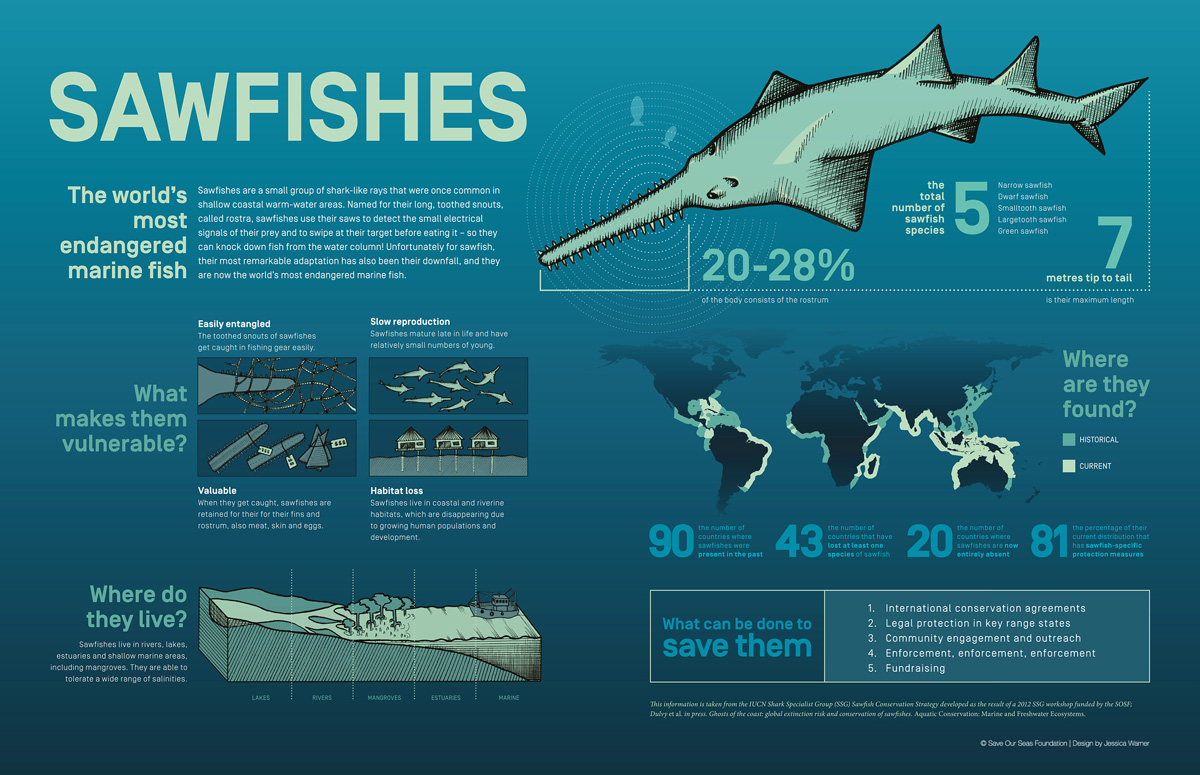
The saw is an elongation of the rostral cartilage. The elongated rostrum, which also bears lateral teeth, evolved at least three times independently in elasmobranchs: twice in rays and once in sharks – in the family Sclerorhynchidae (extinct sawfish), the family Pristiophoridae (sawsharks) and the family Pristidae (living sawfish). For my research I compared sawfishes with their close relatives the shovelnose rays of the family Rhinobatidae. As both taxa are likely to have evolved from a common ancestor that was similar to shovelnose rays, the comparison enabled me to provide a hypothesis about the evolutionary benefit of the saw in living sawfishes.
My research found that the freshwater sawfish Pristis pristis uses its saw both to sense prey (via electroreception and touching) and to manipulate it. Interestingly, juvenile freshwater sawfishes slash at an electric dipole, which resembles visually hidden prey, only when it is suspended in the water. Shovelnose rays hardly react to these fields. When a sawfish encounters an electric dipole field on the bottom, just like a shovelnose ray it tries to gobble up the field source with its mouth. These results clearly indicate that the evolution of the saw enabled sawfishes to expand their hunting strategy to include fast, free-swimming prey.
The saw, however, is also what gets sawfishes into trouble. Saws easily get entangled in fishing gear and the sawfishes wrap themselves up even more in nets when they try to escape from the invisible danger, sometimes becoming dangerous to handle. Saws are also sought-after trophies. Even though all species of sawfish are listed on CITES and the four species in Australia are protected locally under federal and state legislation, saws can still sometimes be found for sale at local markets or on e-bay.
I had always thought that fishermen were taking whole sawfishes and selling the fins separately from the saws. After all, sawfish fins are among the most valuable in the international shark-fin trade and can fetch a few thousand dollars each. But there is a different, even more disturbing practice. Fishermen, both commercial and recreational, are cutting off a captured sawfish’s saw before releasing the animal alive. Although I had heard rumours about this practice, it was only in November 2015, when we finally ran the first research expedition with Sharks And Rays Australia to the Norman River, that I started to realise just how much of an issue it could be.
Situated in the south-eastern corner of the Gulf of Carpentaria, the Norman River is a Mecca for commercial and recreational fishermen who are after barramundi. It is fairly accessible, being one of the few destinations in the Cape York region that can be reached by a paved road. Moreover, public concrete ramps enable boats to be launched easily at Normanton, which lies inland on the river, and at the coastal fishing port of Karumba.
Setting, checking and retrieving gill nets in this river was an adventure. We were manoeuvring in waters with an average visibility of 10 centimetres (four inches). Hidden under the surface were landscapes of boulders, sunken logs and sand bars that were only visible with the aid of modern technology. The presence of large saltwater crocodiles took the required alertness and protocols to the next level. We had prepared for encounters with all kinds of creatures, from our study species to sand flies, mosquitoes, stingrays and stingers. What made the sampling even more difficult was that the river was full of jellyfish. Our net setting required fine-tuning.
After four days of sampling we managed to capture, tag and release one juvenile bull shark and one sawfish. I don’t think that this low sample number reflects the sawfish population of the Norman River, but it will take many more field trips to find out. As a result of our outreach efforts while we were at the Normanton Tourist Park, we received reports of two accidental sawfish captures that took place just days before we arrived. When the sawfishes were captured by recreational fishermen, the saws of both were already missing. The fishes were released alive, but their chances of survival are slim.
Together with the Save Our Seas Foundation Media Unit, the material submitted was turned into an educational video so that this sad occurrence could be turned into an opportunity for public education. Please share it widely.
Facts
In countries where sawfishes are protected, the removal of a sawfish’s saw is illegal.
As sawfishes are listed by CITES (the Convention on International Trade in Endangered Species), any international trade in sawfish body parts or live animals is regulated.
In Australia sawfish are protected under the EPBC Act.
When the saw of a live sawfish is removed, the brain cavity is opened, resulting in the sawfish’s slow, lingering death.
A sawfish uses its saw to find and manipulate its prey. It also uses it to defend itself.
Further reading Morgan DL, Wueringer BE, Allen MG, Ebner BC, Whitty JM et al. 2016. What is the fate of amputee sawfish? Fisheries 41(2): 71–73. Seitz JC, Poulakis GR. 2006. Anthropogenic effects on the smalltooth sawfish (Pristis pectinata) in the United States. Marine Pollution Bulletin 52: 1533–1540. Wueringer BE, Squire LJ, Kajiura SM, Tibbetts IR, Hart NS et al. 2012. Electric field detection in sawfishes and shovelnose rays. PLOS ONE 7: e41605. Wueringer BE, Squire LJ, Kajiura SM, Hart NS, Collin SP. 2012. The function of the sawfish’s saw. Current Biology 22: R150–R151.
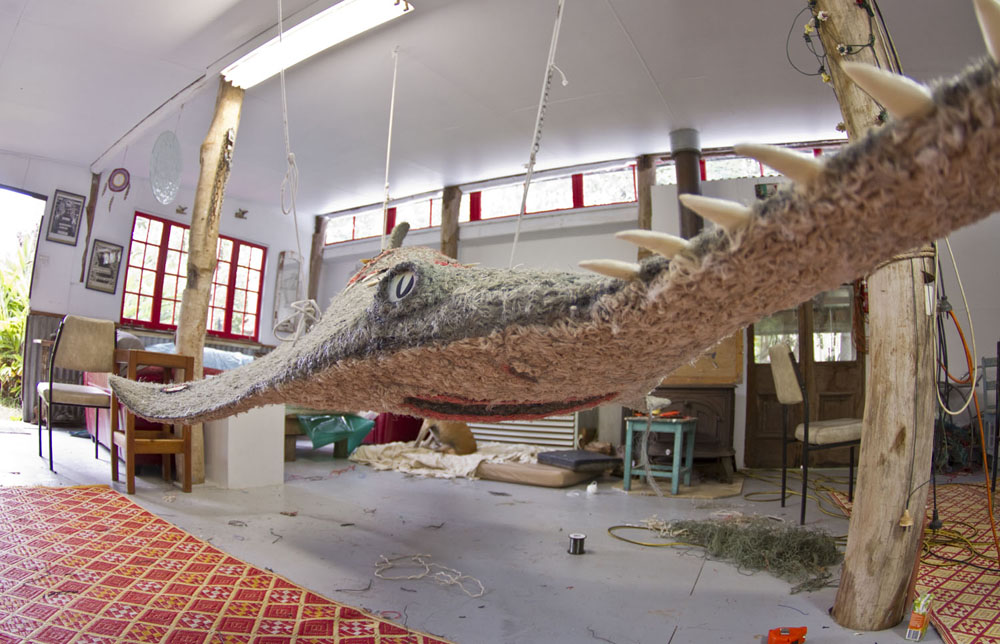
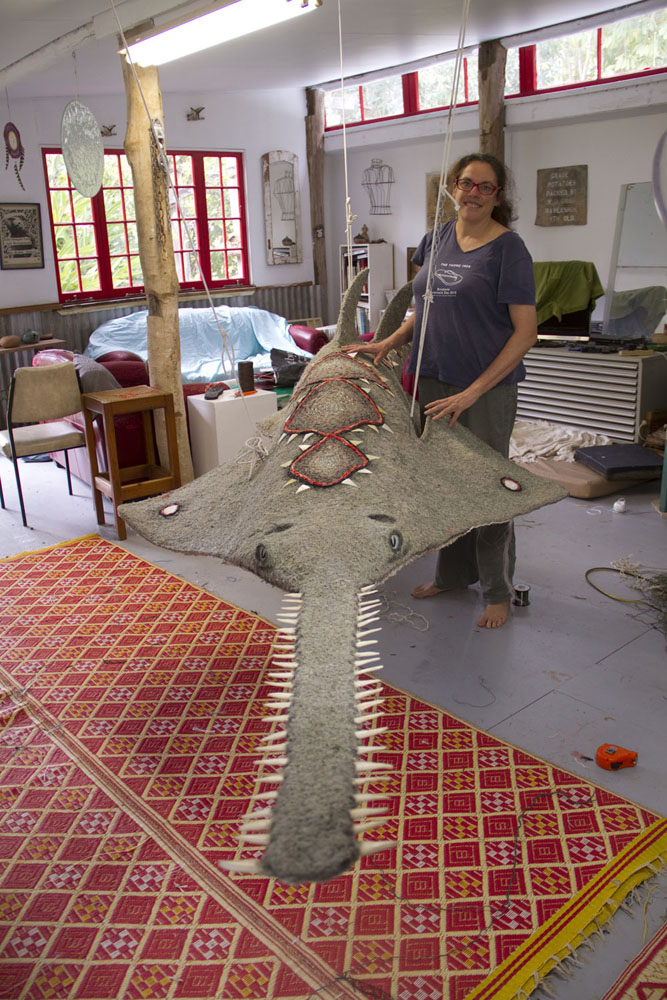
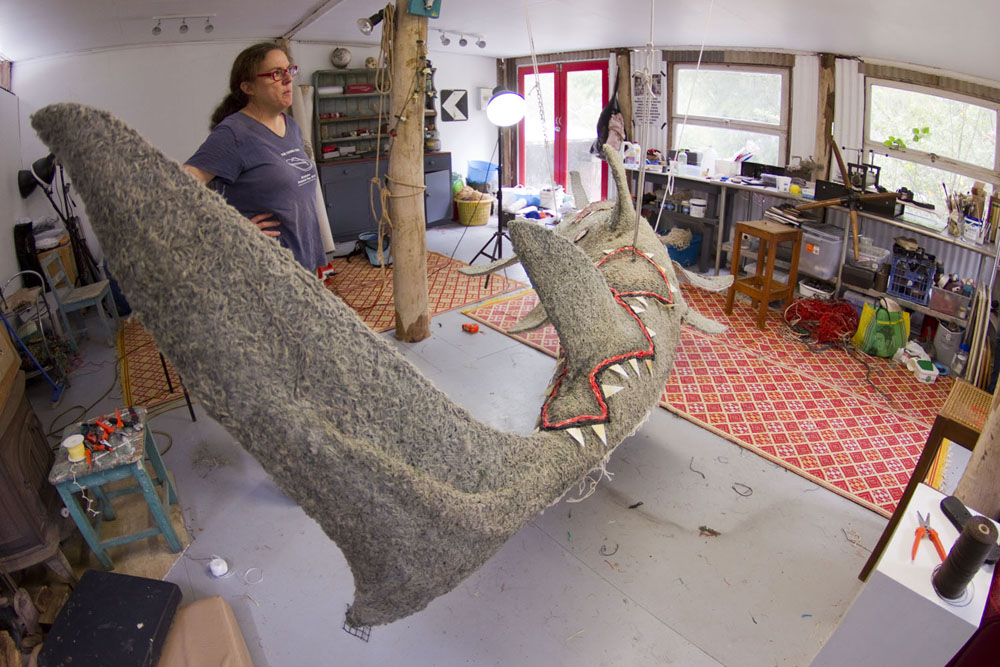
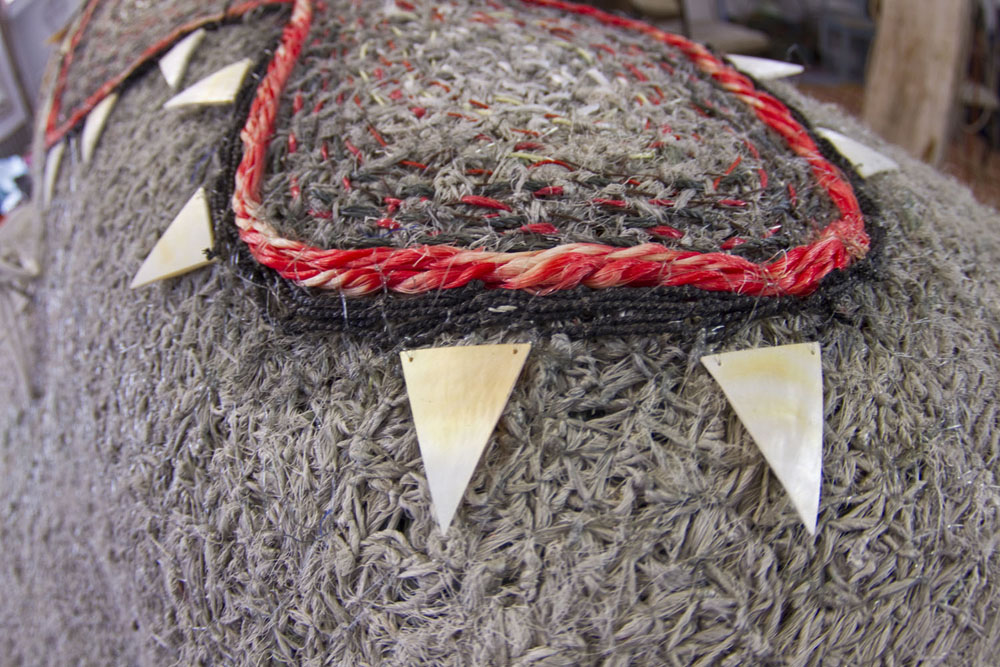
Last week we were fortunate to visit Sue Ryan in her studio near Tomoulin, Far North Queensland. Sue had just finished her sawfish figure. It measures 4.5m long and was comissioned by the Glasgow museum. The frame of the sawfish was made from a chicken wire and bamboo. Its surface is made from ghostnet material that was collected along the coast line of the Gulf of Carpenteria. Sue picks the fibres apart and sews them carefully on the frame. Another artist, Ricardo Idagi from Murray Island, designed the pattern on the dorsal side of the sawfish. The project took seven months to complete.
The week after we visited, the sawfish was placed in a box and is now on its way to Glasgow. I am sure it will be the star of the collection!