by Barbara | Oct 16, 2017 | Blog
By Rebecca Bateman-John (insta: @rebeccabj_captured)
When I first applied to volunteer with Sharks and Rays Australia (SARA) on a sawfish expedition, I was mostly thinking that it would be a fantastic opportunity to get some more field research experience and learn more about other elasmobranchs I haven’t had any/much contact with. While this proved to be true and absolutely valuable, it was so much more than that.
So what else was it? What was so fantastic? Just off the top of my head…. helping a dedicated researcher and her organisation conduct necessary research on the whereabouts of a rapidly diminishing species, educating the local school children on the effects of depleting any part of the food chain, gaining experience in remote area operations, gaining an insight into indigenous culture in their amazing surroundings and how they interact with it, exploring the fascinating region of the inland Gulf of Carpentaria and the insane amount of wildlife that inhabits it, making friends with other like minded people in various related industries, and enjoying the absolute serenity of camping in a remote area…Obviously I had a fantastic time, so much that I would very much like to return, as soon as I can.

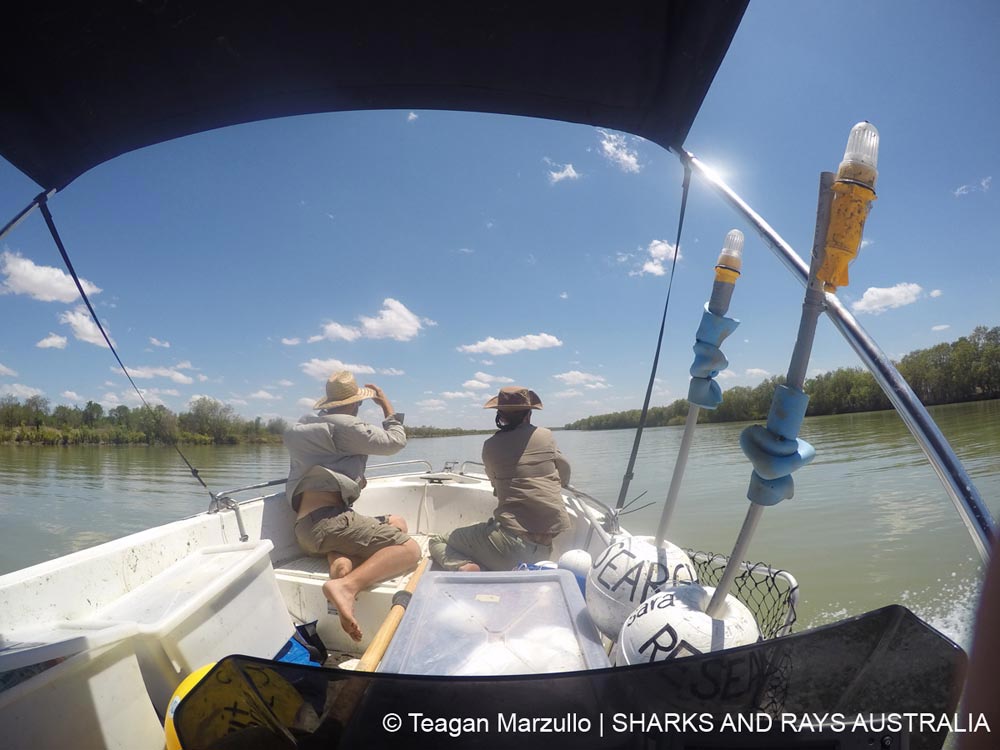
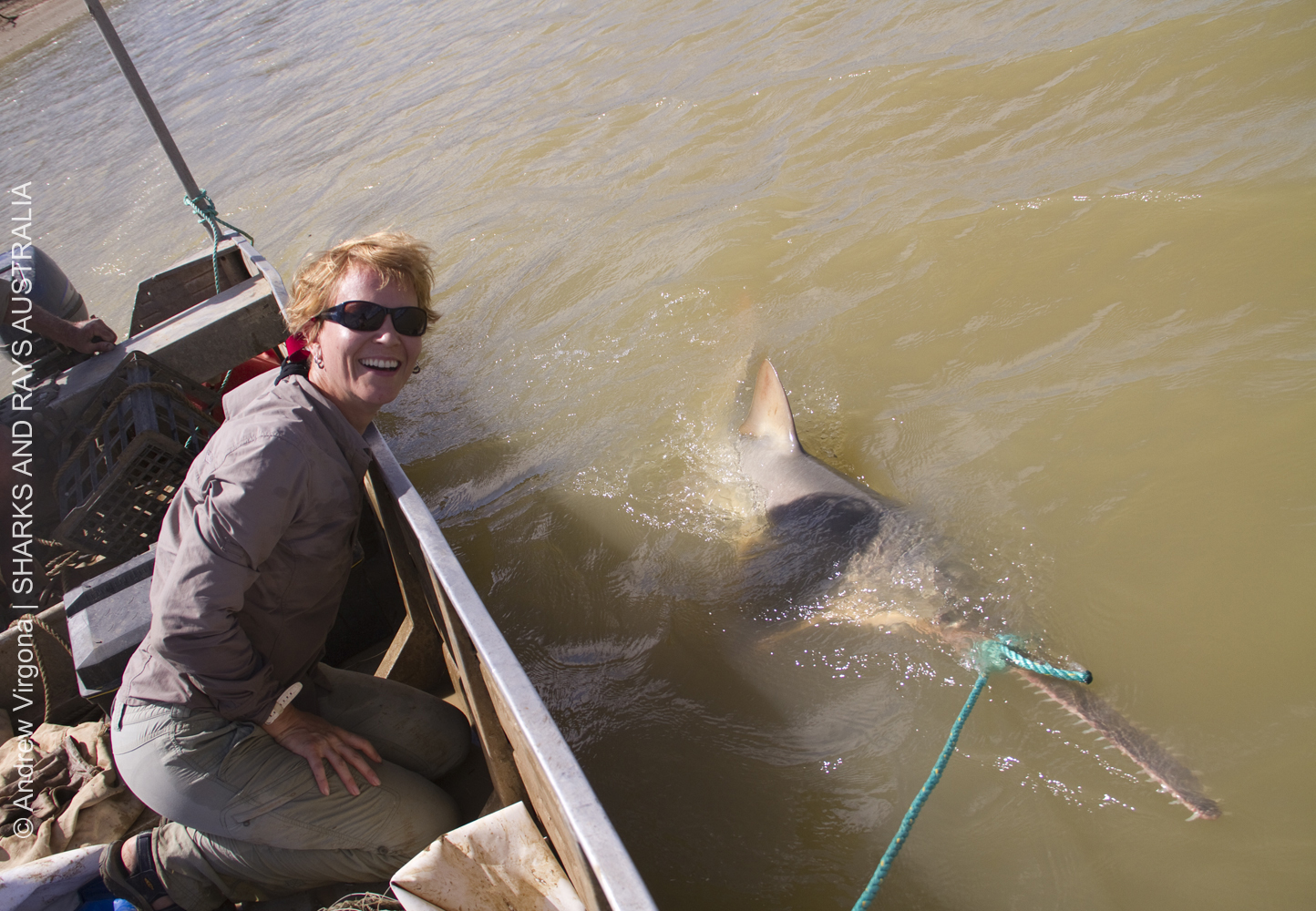
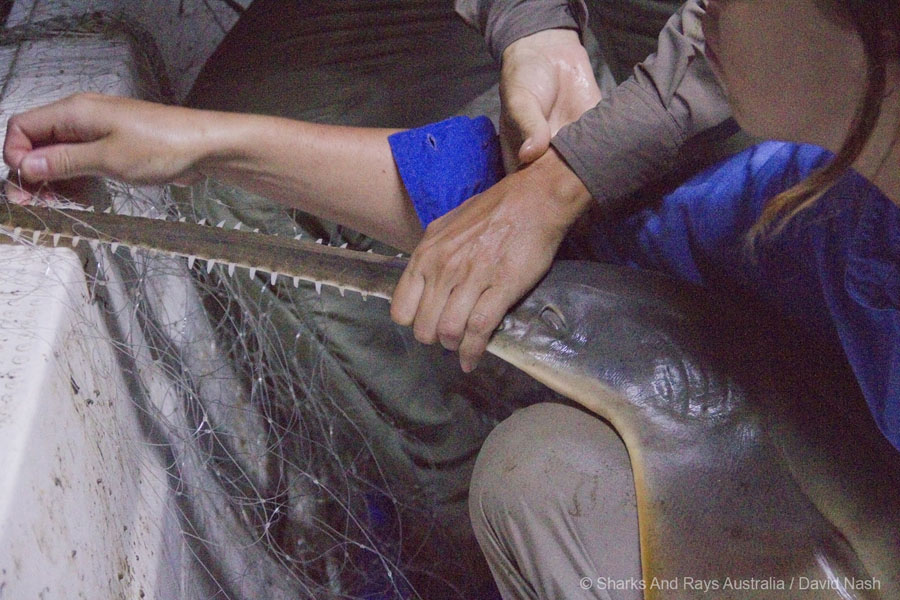
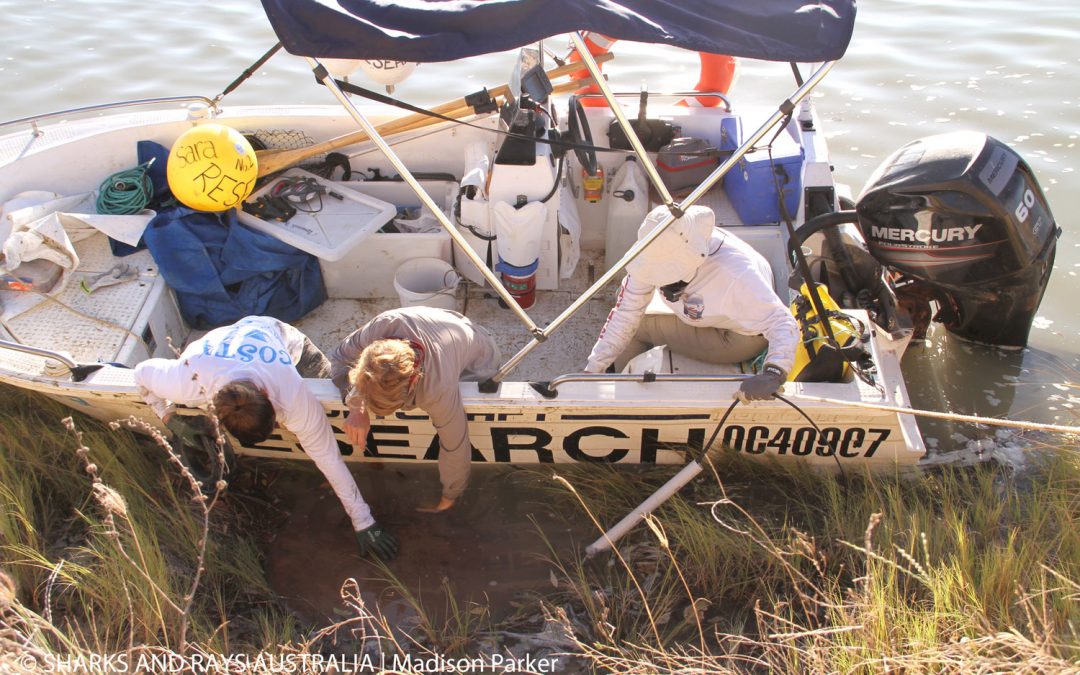
On the research side of things, we had great success. We sampled mostly in a part of the Mitchell River near Kowanyama. Barbara was very excited to sample this area as it is a place that she is currently only able to sample once a year, and has a large area of river systems. We used a combination of gillnetting and drum lining from the boat and hand lining from the riverbank. We were extremely happy to confirm the presence of sawfish in this area, catching two specimens, one of which was a juvenile male, and the other an adult female (which was very sadly sawless). It was heartbreaking to see this sawless specimen as she appeared very malnourished, a likely result of losing her main hunting tool by a fisherman wanting a trophy. Nevertheless, it was great to see her alive and we hoped that she would adapt to sawless life soon and as best as she could. I’m also quite sure that Barbara will be using the images of this animal to raise more awareness of this terrible practice and educate fisherman on the consequences of this action.
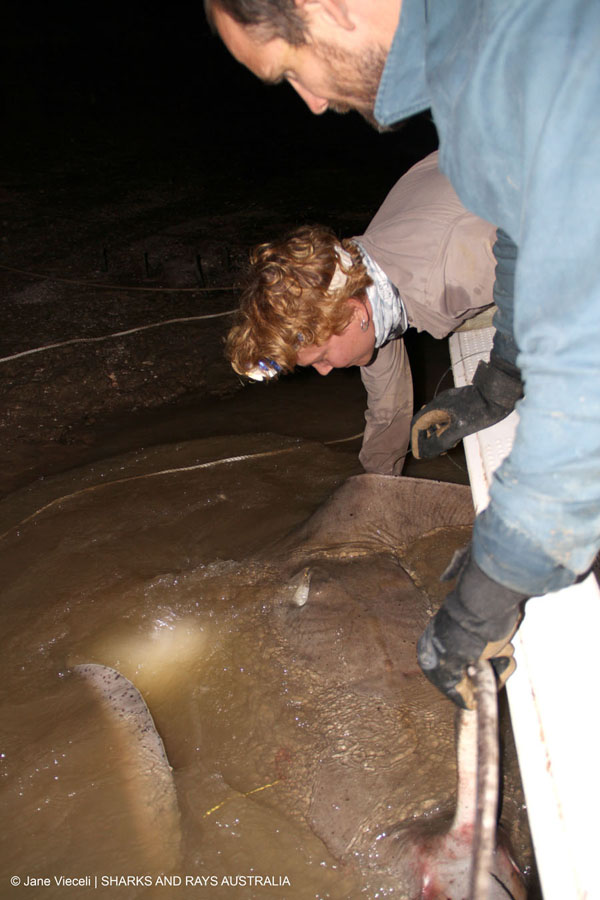
Retrieving the sawfish from the gillnet for a work-up
Preparing to release the sawless adult female sawfish on a sunset hand lining session, with the help of a fellow camper/fisherman.
One of the beloved Freshwater Whiprays
Measuring rostrum width on a juvenile male sawfish
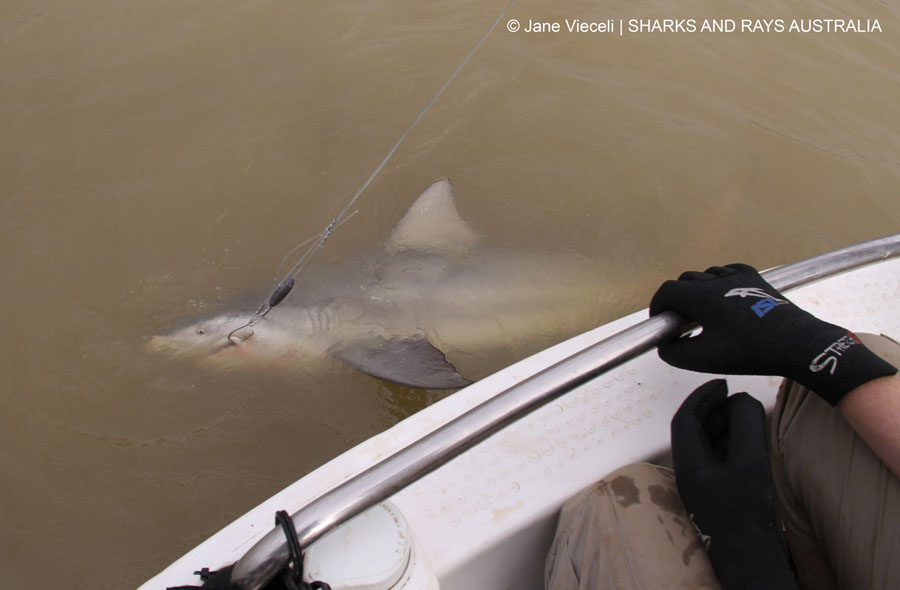
Apart from the presence of sawfish (an enormous win!), we were also glad to confirm the presence of bull sharks with a juvenile male bull shark. We also confirmed a hotspot for Freshwater Whiprays, working up 7 of these in a short space of time. These freshwater whiprays stole a few hearts with their extremely adorable and dextrous snouts! The work up depended on the animal, but usually consisted of measurements, species ID, sexing, taking biopsies and DNA samples, dart tagging and/or PIT tagging, photographing the animal, and releasing it safely. Having quite a small team, we were all able to rotate positions and have the chance to perform the entire variety of roles during the workup, and Barbara was a very passionate and strong leader. Usually the person taking care of photography would also be recording the details of the animal on the data sheet, and assisting the team with anything else they required. Any additional features or notes on the animal were recorded also, along with the fishing method, location, time etc.
In between fishing, we had many things to do, such as helping to fix gillnets (ok I was terrible at it), cleaning equipment , cooking or preparing food, filling water bottles and water buckets, getting the fire going, re-rigging the fishing lines, maintaining the camp toilet, and sometimes a spare moment to relax and cool off with a refreshing bucket shower. The whole trip functioned as a great team exercise, and each member brought their own skills to the expedition.
Sam enjoying a bucket shower
Gill netting on a glassy morning
During the entire expedition we were lucky enough to see an extensive array of wildlife. The amount of bird species we saw was unbelievable. We marvelled at the beautiful Jabiru, the multitude of birds of prey, Barbara even saw her first echidna, and we watched eagerly the shining eyes of crocs in the river at night. During the trip we were careful in selecting camp sites that were most safe from crocs. We analysed the height of the banks, areas of access to crocodiles, tracks, barricades, and distances to our swags. While working up an animal on the banks, we used the boat for protection and kept a watchful eye that we were adequately protected. Although we mainly saw freshwater crocodiles, which are said to be not as dangerous, we did sight at least one that we believed to be a saltwater crocodile. Each time we sighted a crocodile the team was in awe..They really are such an amazing prehistoric creature. Later at night and in the early morning darkness it was particularly exciting, for me at least!
On the way home, we stopped and sampled some other very interesting locations. It was great to explore other regions that could possibly be sampled further in future expeditions. Again we were treated to more wildlife and some stunning scenes of nature.
It was impressive to imagine and then witness the logistics and organisation involved in a SARA expedition and I must admit I have the utmost respect for Barbara in what she has worked hard to establish. It’s quite an operation to drive a troop carrier or two, towing a packed boat and trailer to a very remote location and conduct hands-on research with a team of volunteers for 11 days! Barbara (and SARA) is involved in many aspects of shark and ray conservation, and I look forward to seeing what unfolds in the coming years as a result of her research and dedication.
The whole 11 days was an absolute adventure: the excitement of checking the nets and lines, the four wheel driving, trouble shooting, problem solving, sharing laughter/ information/stories while on the boat or around the fire, tropical downpours, cast net practice, damper making, delicious campfire meals, the serenity, outback stargazing, making friends with fisherman and fellow campers, all of it was an absolute pleasure! I would recommend it to any adventurous spirits or budding scientists who are interested in the research or conservation of this amazing animal.
A beautiful sampling spot, where we also enjoyed a delicious roast lunch
Barbara investigating a potential sampling site
Fun and challenging road conditions!
Above, Team Leader Assistant Rebecca measures a freshwater whipray. thank you for all your help, Re!
by Barbara | May 9, 2017 | Blog
by Liz Xanthopolous, A visitor to this time
by Barbara | May 8, 2017 | Blog
by Liz Xanthopoulos, A visitor to this time

by Barbara | Dec 1, 2016 | Blog
We hope that these images give you an idea of what we do and what you can experience if you decide to join us in the field. This section will not be updated annually, instead you can find more current images from our field work adventures on Instagram, Facebook and Twitter, please search for @SharksAndRaysAU
by Barbara | Dec 1, 2016 | Blog
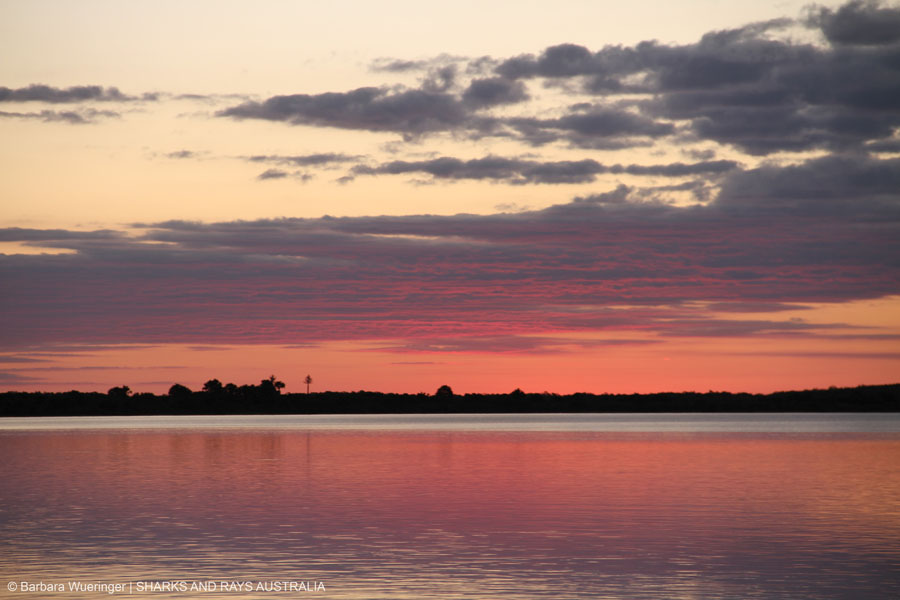
I am sitting in my office in Cairns. When I look out of the window I can see dark clouds hanging in the sky, bringing with them the beginning of the wet season. As our remote field sites can only be accessed by dirt road, these clouds indicate the end of our field season 2016. But what an amazing year it has been!
In 2016, Sharks And Rays Australia commenced expeditions with volunteer field assistants. The response to our call for field assistants at the beginning of the year was fantastic, especially for the fact that this was our first year. People from all over Australia joined us in the field, many of whom were biologists.
We have also been joined by Indigenous Rangers in the field. SARA is now collaborating with five Indigenous Ranger Groups, and their help in the field is invaluable. These guys know their country like the back of their hand, and helped us overcome the many logistical challenges such as launching the boat in areas where there are no boat ramps. They also know which areas are inhabited by particularly large crocodiles and showed us how to read the depth of the river based on the surrounding terrestrial vegetation. Their interest in sawfishes and our research was also incredible, which is very encouraging. For example, the Kowanyama Land and Sea Rangers joined us in the field and on the boat, and almost every one of the Gangalidda-Garawa Land and Sea Rangers joined our presentation and induction. These collaborations make our work more fun and exciting but they are also important. After all, the majority of Queensland’s rivers in which sawfish are likely still abundant, are bordered by country that is under Native Title claim.
Together, we have discovered many amazing places in the Queensland tropics that are completely off the beaten track. We have commenced our study in seven rivers that all flow into the Gulf of Carpentaria, from near the Northern Territory border in the west to north of Weipa. We have experienced an abundance of wildlife, from swarms of grasshoppers, to snakes crossing rivers, to iconic Australian species such as goannas, kangaroos and emus. Our fieldwork was often done under the watchful eyes of saltwater crocodiles and wedge-tail or white-bellied sea eagles. We rescued blue-tongue skinks and pythons that were sunbaking on the roads, and stood in awe of corypha palms that were in bloom. How I miss sitting by the campfire and listening to the songs of whistling kites.
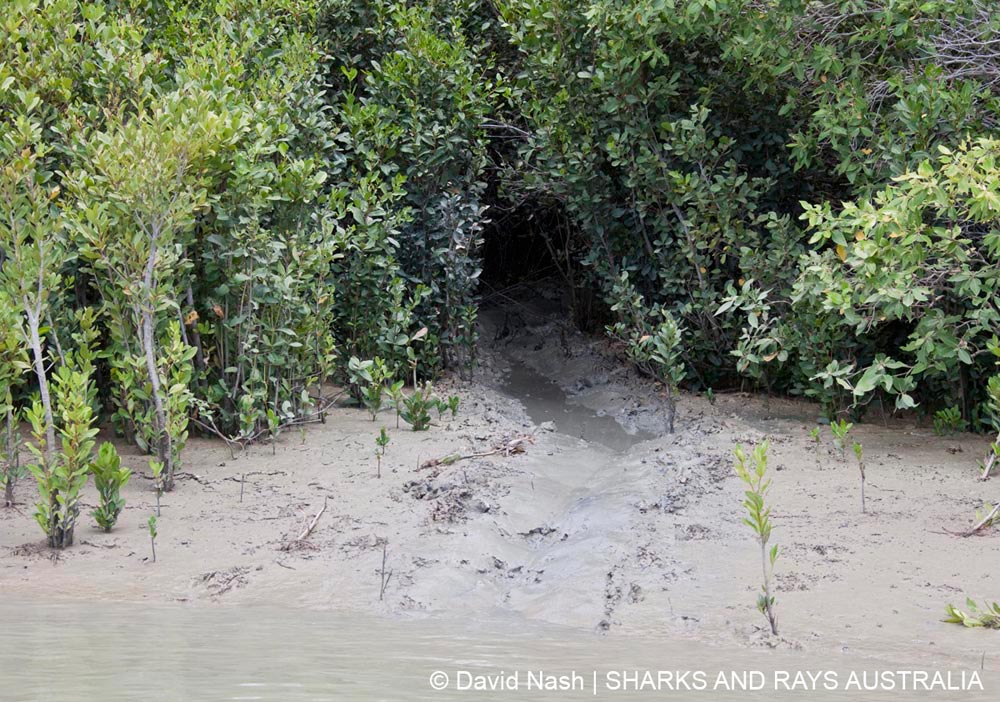
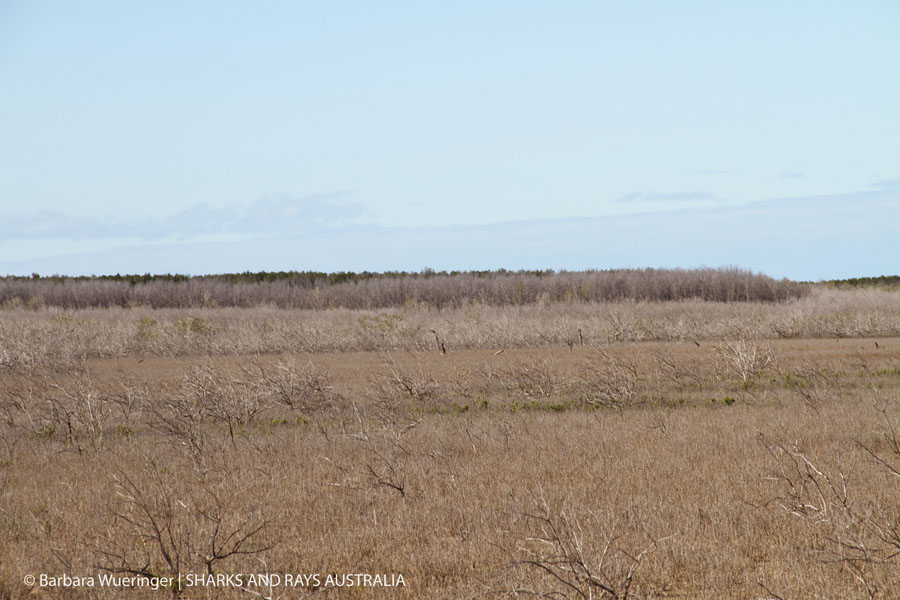
The landscapes we have worked in have been truly stunning and unique. From the endless salt marshes of the Nicholson River to the grasslands that surround the Mitchell River. But we have also seen at first hand the large-scale mangrove die-offs that nobody talks about. It is yet to be seen what these die-offs mean for so many fish and also sawfish that use these submerged forests as nursery grounds.
We also caught, tagged and released 49 elasmobranchs, belonging to seven different species. The most commonly caught sharks were juvenile bull sharks Carcharhinus leucas, with 25 individuals, followed by freshwater whip rays Urogymnus dalyensis, with 6 specimens. Sampling in coastal regions did not get us any of the elusive Queensland sawfish Pristis clavata or Green sawfish Pristis zijsron but we caught, tagged and released five freshwater sawfish Pristis pristis. The diversity of elasmobranch body shapes was reflected in our samples, with juvenile giant shovelnose rays Glaucostegus typus as well as juvenile eagle rays Aetobatus ocellatus being caught. But we have also found evidence of sawfish being finned – a practise that is illegal for anyone in Australia.
As we are not only aiming to understand our study species but also gain a better understanding of the ecosystems they occur in, we also analyse our by-catch, almost all of which was released alive. A total of 276 fish were identified, measured and released! By-catch was clearly dominated by fork-tailed catfish, and within that group Sciades paucus the shovelnose catfish took the lead. These results clearly show that gill nets and drum lines are only selective by size and not by species, but our sampling strategies have also proven to be effective in ensuring that most animals are released alive.
Our field assistants have brought many skills to our expeditions this year, and they have also learned many things, about our research, sawfish, our methods and also about themselves! Spending time in relatively untouched, remote ecosystems often brings us back to ourselves and exposes our strengths and fears. But as a team we can overcome these challenges and learn from each other.
In 2017 SARA will expand even more. We will continue to run our project on the assessment and distributions of sawfish and other sharks and rays in our study area. With this we will continue to collect DNA and stable isotope samples, and we are hoping to explore more rivers.
We will help Mangrove Watch assess the state of the mangrove forests that we work in, and we will commence sampling rivers for environmental DNA (eDNA) of sawfish, in collaboration with Prof. Colin Simpfendorfer from James Cook University.
We also hope to increase our presence in local schools, not only showing kids what we do but also introducing our food web game that will be developed in collaboration with Sharks4Kids.
We are hoping to commence trials for new methods of capturing sawfish. And hopefully SARA can grow, as we will be seeking students to take over some of our projects, like the stable isotope study of river food webs, and our accelerometer study of sawfish behaviours. So stay tuned, join our newsletter and regularly check into our facebook page!
Click here to see 2016 in pictures
by Barbara | Nov 30, 2016 | Blog
Access the original blog post written for the Save Our Seas Foundation here
By Barbara Wueringer
One of the goals of my project was to find out if sawfish are or have the potential to be a flagship species for the geographical region and ecosystems that they are found in. As this first field season for Sharks And Rays Australia comes to an end, and with it the Project “Sawfishes – spreading the love”, it is time for an assessment. It has been an unforgettable year, and this is what this post is about – the other side of our sawfish research – that, what comes under the umbrella of our flagship species. This post is a tribute to the ecosystems that we have entered over the last year, the people we have met, the animals that we were lucky enough to encounter and some unforgettable moments. Enjoy!
As we came closer to this large puddle that used to be the middle of the road, we saw a soaking wet emu getting up and running away. We had interrupted his bath.
The Kownayama Indigenous Land and Sea Rangers, Traditional Land Owners and SARA field assistants are inducted into the methods used for capturing, tagging and releasing sharks, rays and sawfish for research.
Barbara explains our research and our methods to the Gangalidda-Garawa Rangers of the Carpentaria Land Council Aboriginal Corporation. A sawfish forms part of this groups’ logo, indicating the traditional importance of these animals in the region.
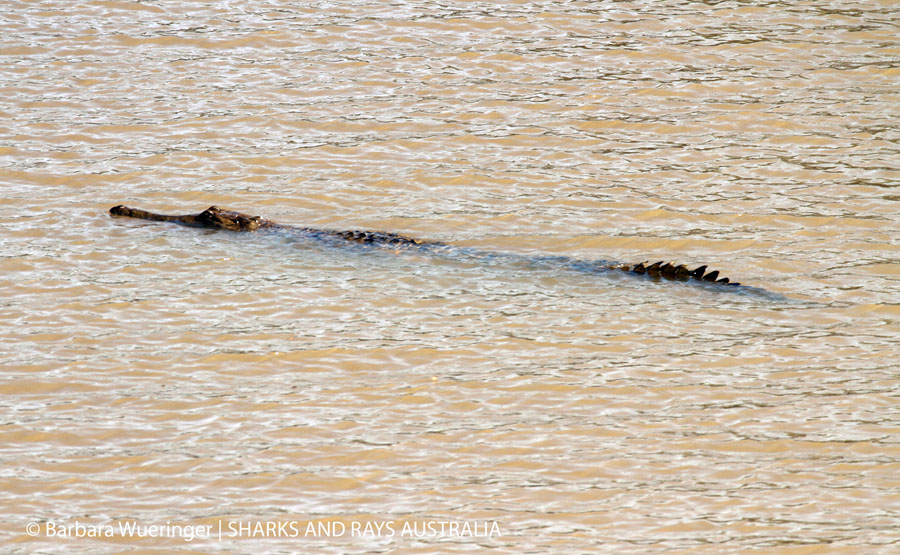
This freshwater crocodile Crocodylus johnstoni was around 2.5 m long.
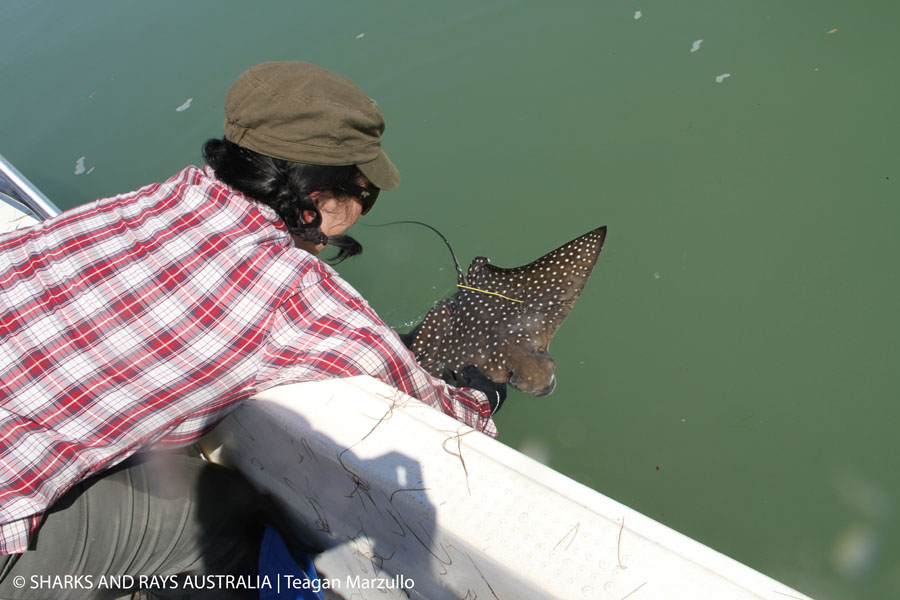
Our volunteer Laura releases a juvenile eagle ray Ateobatus narinari.
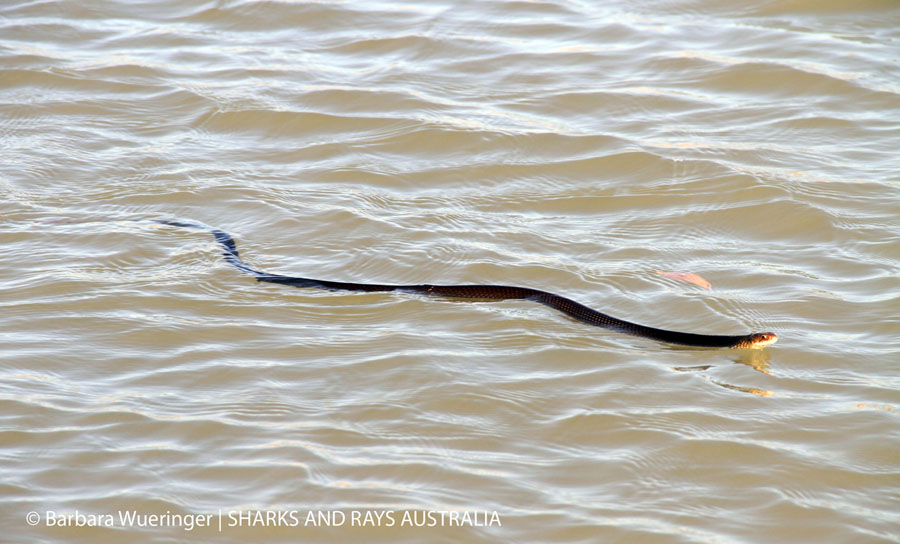
A black whip snake Demansia vestigiata swims across the river and almost into our gill net. A second one was rescued from the net and delivered to the other side of the river.
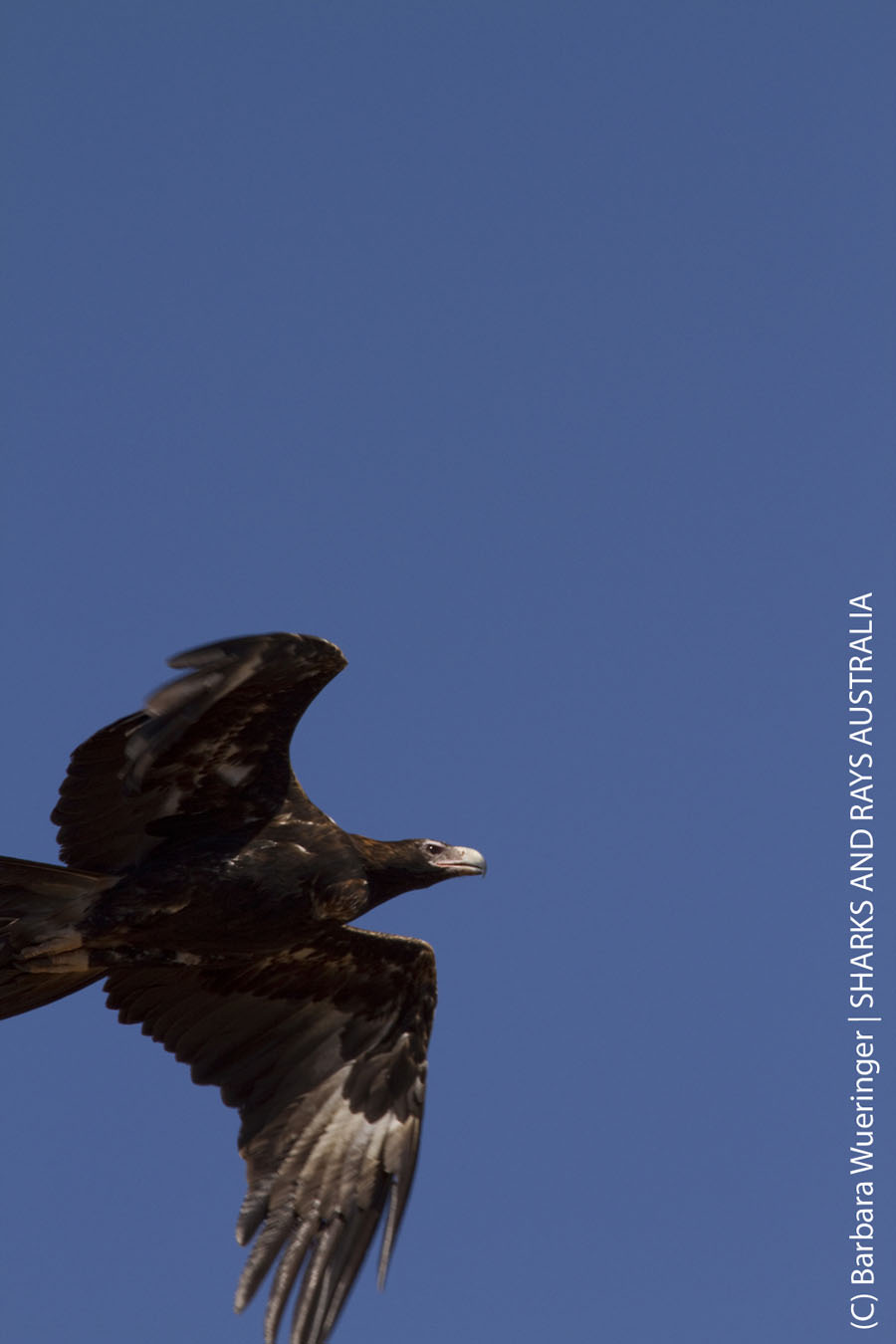
A wedge-tail eagle Aquila audax watches us from above
Every little dot in this image is a locust, and the swarm we drove through in the Southern Gulf of Carpentaria lasted for over 10 km!
A juvenile freshwater sawfish Pristis pristis is tied to the boat, and slowly brought into shallower water to be worked up.
While most people heard about this year’s el Nino event, which killed approximately 22% of the coral cover of the Great Barrier Reef, not so many people have heard about the extensive, and unexplained mangrove die-offs, that happened in the southern Gulf of Carpentaria. Kilometer long stretches of mangroves were affected. What will this mean for the animals that inhabit mangroves, and for the functionality of this important ecosystem?
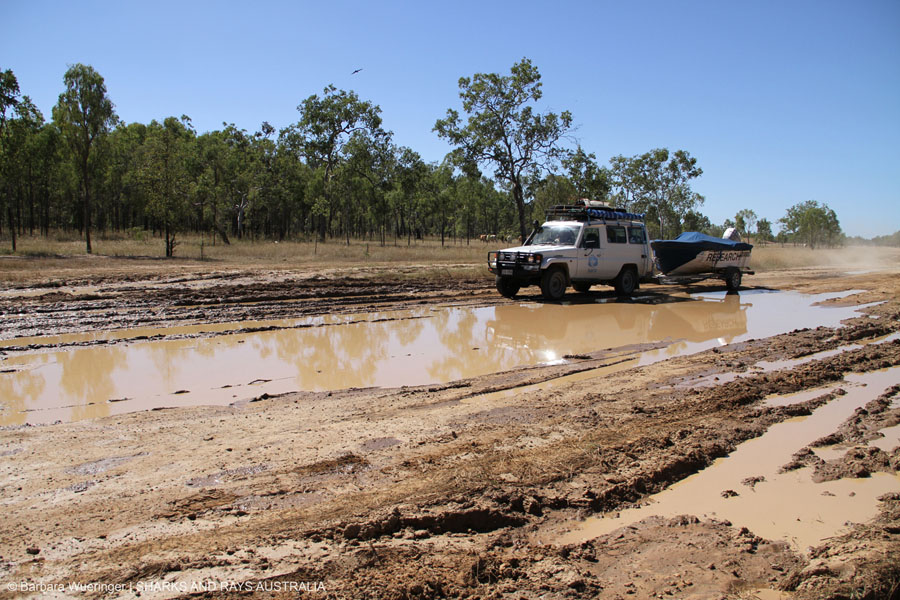
Some of our research sites are hard to reach, as roads are easily washed away. Here we were on our way to Kowanyama.
A freshwater whip ray Himantura dalyensis that we caught measured 120 cm in disk width. Mitchell River, Kowanyama.
We just caught a bull shark Carcharhinus leucas!
Two white-bellied sea eagles Haliaeetus leucogaster soak up the warmth of the morning sun on a dead cabbage palm Coryphan utan. This palm grows to a height of about 20m, and at the age of 30 – 40 years produces a 5 m high inflorescence that carries about 1m million flowers. After fruiting the plant dies.
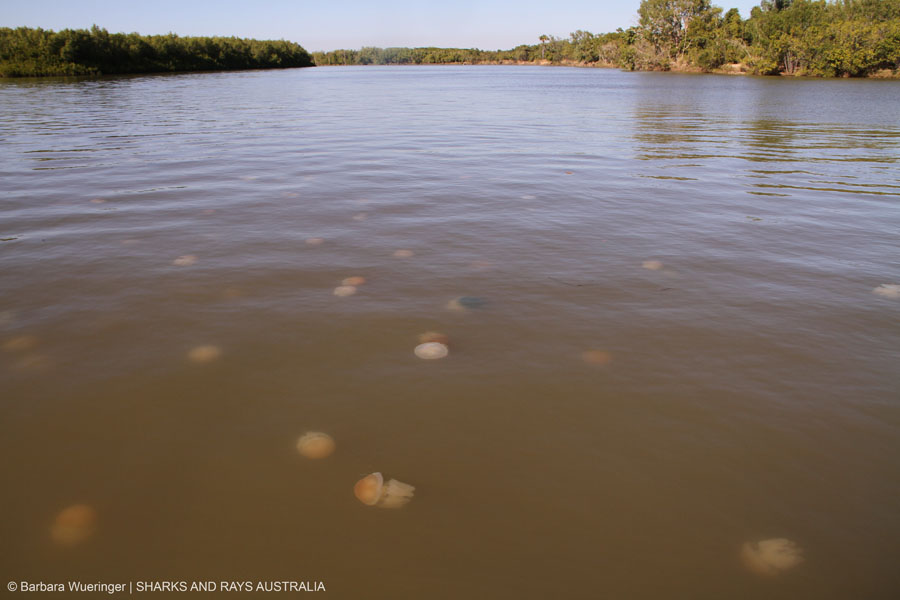
Jellyfish often make their way upstream into the brackish waters of the rivers leading into the Gulf of Carpentaria.
Our volunteer Stuart, who is a professional reptile handler, helped this black-headed python Aspidites melanocephalus across the road to prevent it from becoming road kill
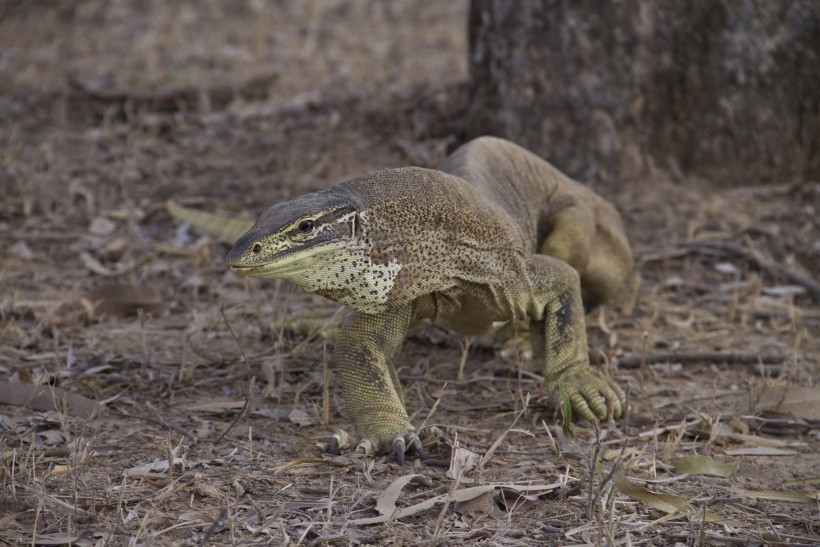
The Yellow spotted monitor Varanus panoptes is widely distributed across Northern Australia. It can attain total lengths of up to 1.4m