East Coast sawfish

East Coast sawfish

There it was! For many people what we were looking at was probably meaningless but for me it meant the world. We were in Rinyirru (Lakefield) National Park (CYPAL, Cape York Peninsula Aboriginal Land), following a ranger car on a dirt road, to a turn off with a sign displaying “Bizant River” in big yellow letters. It’s probably ridiculous how excited I was, but when you spend your whole adult life studying euryhaline sharks and rays that move between fresh and saltwater, the Bizant River has an almost mystical meaning. After all that’s where the first specimens of speartooth shark Glyphis glyphis were found.

Rinyirru National Park is the second largest national park in Queensland and it is home to the Lama Lama and Kuku Thaypan peoples, the Bagaarrmugu, Mbarimakarranma, Muunydyiwarra, Magarrmagarrwarra, Balnggarrwarra and Gunduurwarra clans and related families. It contains many story places and sites of traditional significance and its ecological significance is immense, with large river systems as well as around 100 permanent billabongs. Most people would have heard about the park through the extensive adventures of the crocodile hunter, Steve Irwin. What not many people know is that Rinyirru NP and its rivers are also home to what is likely the last population of freshwater sawfish Pristis pristis on the east coast of Australia.

Since our first exploratory trip in 2018, our project aiming to identify the distributions of sawfishes within the park, has grown. In 2020 we were awarded a Queensland Government Community Sustainability Action grant, auspiced by Cape York NRM. In collaboration with Rinyirru Aboriginal Corporation and their Land and Sea rangers, and also the Laura Land and Sea rangers, we aimed to identify sawfish habitat and assess species distributions between 2020-2023.

In May 2023, Sharks and Rays Australia was awarded a Threatened Species research grant from the Queensland Government. The funds will allow implementation of a sawfish tracking study in Rinyirry (Lakefield) National Park (CYPAL, Cape York Peninsula Aboriginal Land), together with our collaborators at Rinyirru Aboriginal Corporation and their Land and Sea rangers, the Laura Land and Sea rangers, The Queensland Government and the University of the Sunshine Coast.

In September 2023 we ran the last field trip under the CSA grant, but already implemented the first steps for our new funding, and so the first acoustic receivers were deployed in the park. The highlight of this field trip was another encounter though, as we all met with the Queensland Minister for the Environment, Hon. Leanne Linnard, and also the Minister for the Environment and Water, Hon. Tanya Plibersek. We got them to tag their own little sawfish which they then also took home.

Image: Dr Wueringer (SARA) with the Hon. Tanya Plibersek, Federal Minister of Environment and Water (left) and the Hon. Leanne Linnard, Queensland Minister of the Environment and the Great Barrier Reef, and their sawfish.

Image: Nikki Biskis (SARA) and Gene Ross (QPWS, Rinyirru) geared up to set acoustic receivers on a steep bank. 

Snapshots of stewardship: a multi-day training in Coen, QLD

Snapshots of stewardship: a multi-day training in Coen, QLD

by Veronika Biskis

Continuing our work with the Lama Lama Land and Sea Rangers, SARA was invited to provide training in sawfish monitoring for the Rangers and the local community in Coen, QLD in July. The entire journey was documented by the talented Don Silcock, who was not only capturing the trip, but delving into untold stories from Elders in the region.

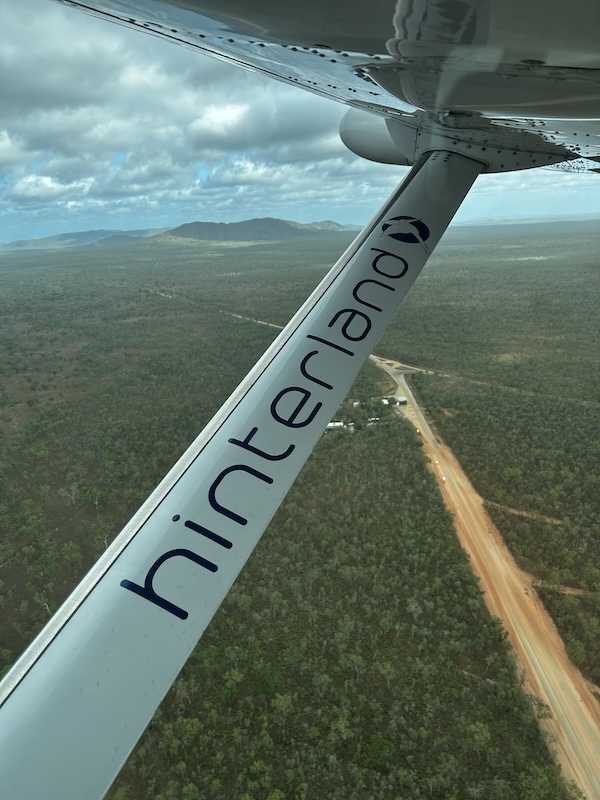
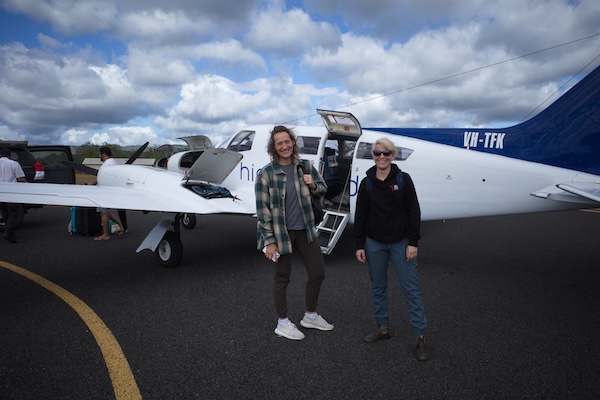
The trip to Coen was a first for us – travel via plane! The SARA team is well versed in the two day trek up from Cairns in the troop-carrier, but with funding from the Engaging Science Grant received this year, we were able to hitch a ride on an 8-seater Cessna. Unsurprisingly, the Cape looks just as incredible from above, and is always the reminder for just how remote our work is.

Figure 1: (L) The PDR from the Hinterland Plane (R) Nikki and Barbara at the Coen Airport

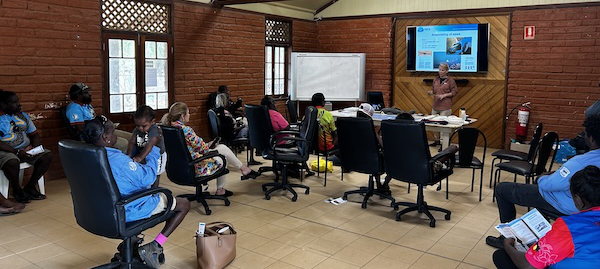
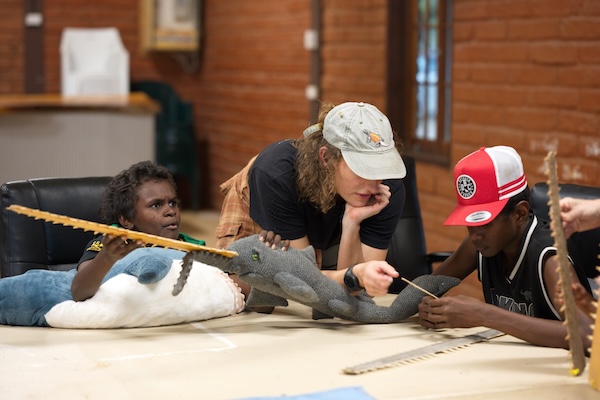
Alison Liddy of the Lama Lama Land and Sea Rangers organised a workshop with the Junior Rangers for the first evening. Dr Wueringer presented to some new and familiar faces on fundamental principles such as food webs, healthy ecosystems, as well as hands on techniques in field science. We are extremely lucky for the opportunity to talk about traditional and modern methods in caring for Country with the next generation of local scientists.

Figure 2: The junior rangers mastering sawfish ID and how to tag sawfish. 

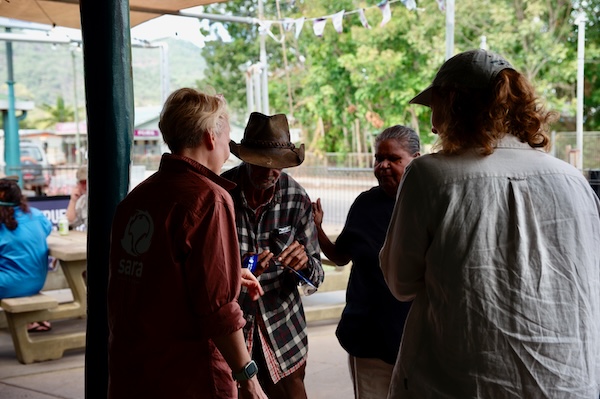
The second day was aimed at citizen scientists, recreational fishers, and the Rangers. Participants learned about sawfish biology, survey methods, and tagging. After the event, Elders shared stories of growing up in Coen and seeing sawfish in their youth. These rare examples of Local Ecological Knowledge (LEK) create real context in understanding changing environments. Don Silcock documented this connection to Country throughout. In the afternoon, we headed to the famous Exchange Hotel, where locals continued to share their past experiences with sawfish.

Figure 3: (L) Barbara presents to the community in Coen. (R) Revising sawfish ID with Lama Lama Land and Sea rangers. 

This whirlwind trip to Coen, Queensland, marked another milestone in our ongoing effort to involve the entire community in sawfish conservation, whether that’s kids, Traditional Owners, visiting fishers, the Indigenous Land and Sea Ranger program or Queensland Parks. Don’s photographs captured not only the educational aspects of the trip but the cultural significance, helping to build a visual narrative that will resonate with audiences beyond the Cape. This trip would not have been logistically possible without funding from grants like Engaging Science, allowing for citizen science and collaboration between organisations from across the state.

Figure 4: (L) Barbara, Nikki and Alison speak with Brian Ross. (R) from left to right: Lama lama ranger, Alison Liddy, Barbara Wueringer, Nikki Biskis, Don Silcock

8 sawfish

8 sawfish

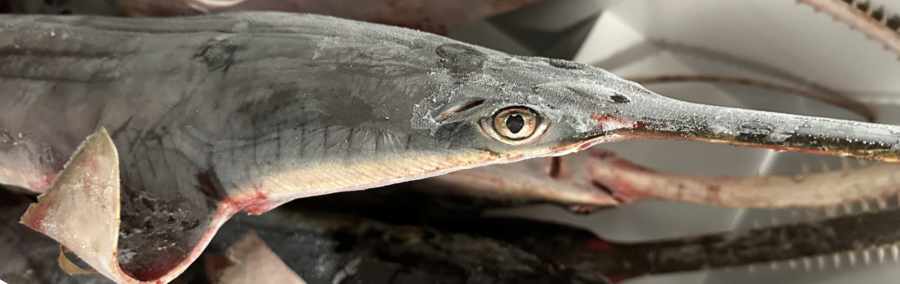
Earlier in 2023 we received a donation of eight juvenile narrow sawfish Anoxypristis cuspidata that had died as part of an accident. The animals are extremely well preserved, as they were frozen immediately after death. This is an extremely rare occurrence. While we do have projects in mind that will be done with samples from these sawfish, we would like to maximise the data that will be collected from them. If you are interested in receiving samples for a project, or can think of interesting angles for a project, please let us know in the contact form below.

The deadline for submissions is November 2023.


8 sawfish
Name
Name
First
Last
is this a
Is your project funded?
Do you have the permits necessary to obtain sawfish samples?
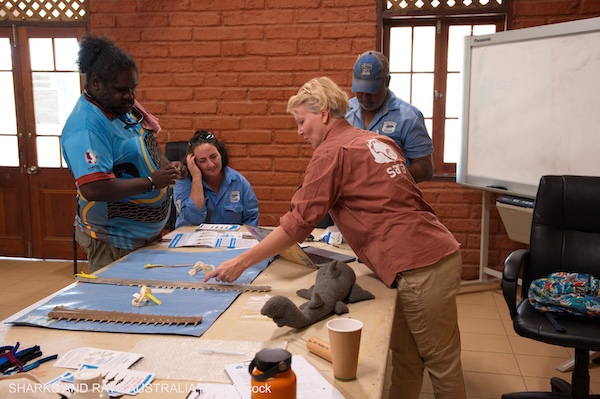
Cultural Awareness Day in Rinyirru (Lakefield) National Park CYPAL

Cultural Awareness Day in Rinyirru (Lakefield) National Park CYPAL

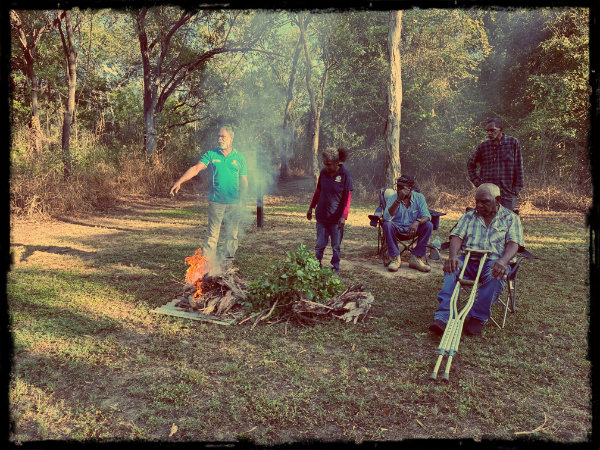
The activities of the day commenced with a smoking ceremony, followed by a cultural walk at Kalpowar crossing. Kalpowar Crossing is an important story place for local groups, and the stories include the moon story, which limits who can enter the water. Desmond Bowen, the acting Chair of Rinyirru Corporation welcomed us to country.

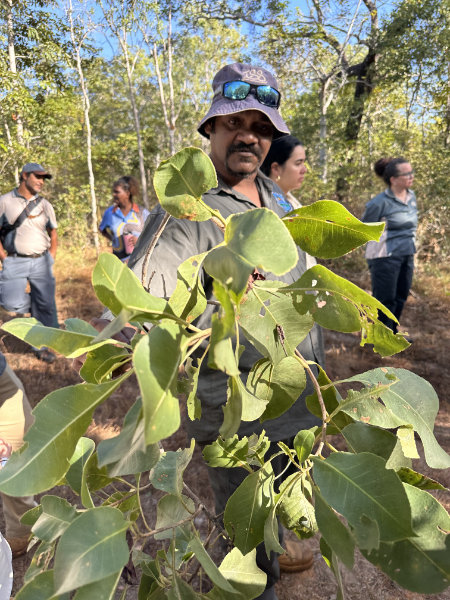
Lawrence Jacko from Rinyirru land and Sea Rangers explains that this tree can be used to deprive the water of oxygen, and also as natural soap. 

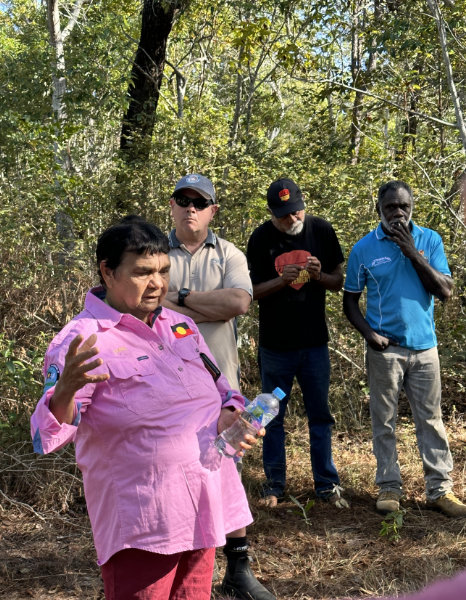
Estelle Bowen of Rinyirru Aboriginal Corporation welcomes us to Country and explains the history of the park. 

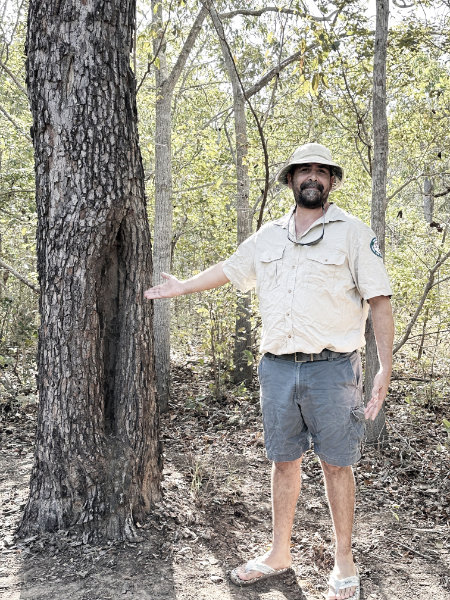
Estelle Bowen explained the history of the park, and how all nine clan groups worked together to create Rinyirru National Park. During the walk we learned about some of the native plants and Reagan Hart from the Cultural Heritage team at QPWS showed us and explained the meaning behind scar trees. The walk is accessible and marked for everyone, so check it out next time you are there.

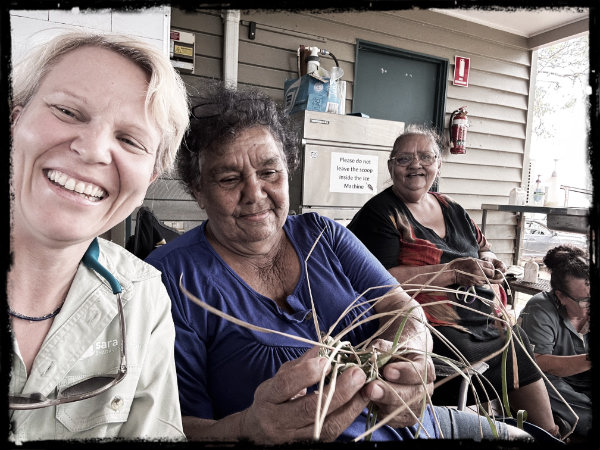
After that, various activities commenced, including learning of some words in the local language, and making baskets, and spear making and throwing. The day ended with a yarning circle.

We would like to thank Rinyirru Corporation for their invitation to this amazing day. Barbara learned so much, and felt honoured to hear some of the stories lived by people who we work with.

These lovely ladies showed Barbara how to weave the traditional way.

Reagan hart form the Cultural Awareness team from Queensland Parks and Wildlife Service points out a scar tree. 

My Six-Month Internship: Year Five

My Six-Month Internship: Year Five

by Nikki Biskis

Sometimes I think back to that day in Melbourne where I called Barbara at Sharks And Rays Australia to ask what she had. We had an honest conversation. I was trying to break into the field of ecology, but I couldn’t afford more student loans. I’d work for free, as long as I had to, until I had the experience and papers I needed to get into a program. I just finished one internship down here and was not ready to go back to the States. The plan was to give trophy rostra another life, through display cases aiming to at educate fishers. It would take six to nine months, and I would work on other datasets as an intern with SARA.

Fast forward to three years later, and I was beginning my PhD, with the plan of assessing sawfish ecology through reported sightings, historic records, and acoustic tracking. Over the last two years, I’d seen rostra and photographs – hundreds and hundreds of each – but now I finally got to head into the field and see these animals in the wild! With the first round of display cases finally built, Barbara and I began to distribute them on our way to field sites in Far North Queensland. They’d continue to engage the community long after we were gone.

Except I didn’t see a live sawfish, not for a long time. But the communities did. The cases became a talking point at the local roadhouses and information centres. One day I got an email from Lockhart River saying that they’d seen our case in Coen – could they have one too? More importantly, the Land and Sea Ranger stations jumped on board, all nine of which are involved in ongoing field surveys for sawfish on Country, reporting sightings back year-round. What started as a short project was turning into a strong community, in ways that I had not anticipated.

Since the first round of deliveries, we branched out to include more populated areas down south. These areas report a higher percentage of dead or saw-less sawfish, highlighting critical locations for outreach. We led SARA’s first Mackay field expedition in Nov 2021, and as with the rest of my journey, the Display Cases came with us. Large organisations like Australia Zoo and the Kingfisher Bay resort on K’Gari (Fraser Island) also got involved. In May of this year, the first confirmed sawfish sighting was reported off K’Gari in 60 years.

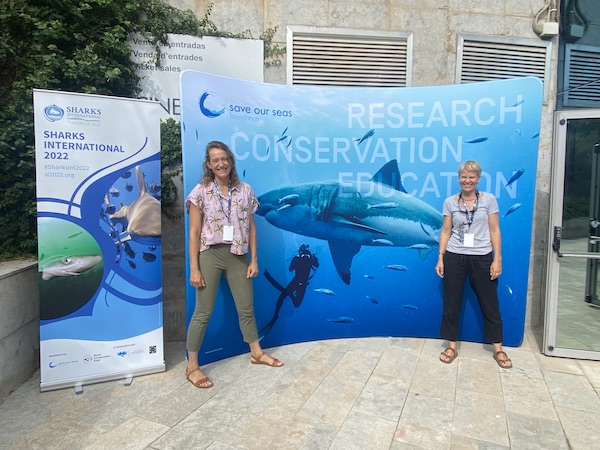
The display project wrapped up in September, which was bittersweet. However, the conversation continues, not just locally, but internationally as well. Both Barbara and I presented research at Sharks International in Valencia, in October. These presentations highlighted findings from the rostrum collection (1), and our citizen science database (2), showing that the original mission is a reality. These rostra are more than just old trophies – they have enormous potential to protect the animals we have left.

As for me, I am officially a confirmed PhD candidate as of this month. It seems awfully fitting that I sent out one of our last remaining cases to Mackay the day before my confirmation seminar. My thesis has shifted away from tagging back to where it all began – rostra. I got to complete a morphometric analysis, two years in the works, which is due to be submitted as a publication early this year (3). The sightings chapter is currently being analysed, and in addition to Sharks International, I presented preliminary findings at the annual conference of the Australian Society of Fish Biology in Gold Coast in November (4). Rostra are also a critical part of Chapters 3 and 4, looking at tooth microchemistry to determine provenance, and historic records.

In the end it was clearly not a one-year project, rather, these display cases heralded my entry into the sawfish world. I cannot thank Save Our Seas enough for the ongoing adjustments to grant terms during Covid, supporting a project that has brought together so many people to look after sawfish. And of course, Sharks And Rays Australia (read: Barbara) for the continued support and training as I navigate this PhD, and taking a chance on me in the first place.

Major funding for the Display Case Project, Citizen Science Database and our Sawfish Spotter’s t-shirts was provided by the Queensland’s Chief Scientist’s Advanced Queensland Citizen Science Initiative. This project was also supported by a Small Grant from Save Our Sea Foundation. Our field work for 2020 and 2022 was funded by: Sea World Research and Rescue Foundation Inc., Great Barrier Reef Foundation, Queensland Government Community Sustainability Action Grants.

References:

  1. Wueringer, BE, Biskis, VN & Pinkus, GA. 2022. Impact of trophy collection and commercial fisheries on sawfishes in Queensland, Australia. Endangered Species Research. In print.
  2. Biskis, VN, Townsend, KA, McDavitt, MT & Wueringer, BE. Analysis of current species ranges, hotspots, and interaction with regions of high fishing pressure in Queensland (in prep)
  3. Biskis, VN, Wueringer, BE, Holmes, BJ, & Townsend, KA. Using rostral morphometrics to access size class info from historic sawfish specimens (in prep)
  4. Biskis, VN, Townsend, KA, McDavitt, MT & BE Wueringer (2022) Sawfish spotters fill data gaps critical for sawfish protections in Queensland, Australia (Abstract)

Thank you to all participating display locations:

  • Albatross Bay Resort, Weipa, QLD
  • Archer River Roadhouse, Archer River, QLD
  • Australia Zoo, Beerwah, QLD
  • Bamaga Tavern, Bamaga, QLD
  • Barra Jacks, Rockhampton, QLD
  • Barramundi Discovery Centre, Karumba, QLD
  • Burdekin Gateway Visitor Information Centre, Home Hill, QLD
  • Burdekin Visitor Information Centre, Ayr, QLD
  • Burke and Wills Roadhouse, Four Ways, QLD
  • Burketown Information Centre, Burketown, QLD
  • C4 (Community for Coastal Cassowary Conservation), Mission Beach, QLD
  • Cape York Peninsula Lodge, Bamaga, QLD
  • Capricorn Coast Information Centre, Yeppoon, QLD
  • Cardwell Rainforest and Reef Visitor Centre, Cardwell, QLD
  • Chillagoe Cockatoo Hotel, Chillagoe, QLD
  • Chillagoe Hub Information Centre, Chillagoe, QLD
  • Cloncurry Unearthed Visitor Information Centre & Museum, Cloncurry, QLD
  • Croydon Club Hotel, Croydon, QLD
  • Daintree Discovery Centre, Cow Bay, QLD
  • Daydream Island, Whitsundays, QLD
  • Eimeo Pub, Mackay, QLD
  • Exchange Hotel, Coen, QLD
  • Gregory Downs Hotel, Gregory, QLD
  • Gympie Bones Museum, Gympie, QLD
  • Hann River Roadhouse, Laura, QLD
  • Hemingway’s Brewery – Cairns & Port Douglas, QLD
  • Heron Island Research Station, Heron Island, QLD
  • Historic Village Herberton, Herberton, QLD
  • Hope Vale Ranger Station, Hope Vale, QLD
  • Kingfisher Bay Resort, K’gari, QLD
  • Koumala Hotel, Koumala, QLD
  • Kowanyama PBC, Kowanyama, QLD
  • Kowanyama Ranger Station, Kowanyama, QLD
  • Kuranda Visitor Information Centre, Kuranda, QLD
  • Lakeland Hotel Motel, Lakeland, QLD
  • Lakeland Roadhouse, Lakeland, QLD
  • Laura Roadhouse, Laura, QLD
  • Mackay Marina, Mackay, QLD
  • Mapoon Aboriginal Shire Council, Mapoon, QLD
  • Moreton Bay Research Station, Dunwich, QLD
  • Moreton Telegraph Station, Wenlock, QLD
  • Mornington Island Arts Centre, Mornington Island, QLD
  • Mornington Island State School, Mornington Island, QLD
  • Musgrave Roadhouse, Yarraden, QLD
  • Nature’s Powerhouse (Cooktown Visitor Information Centre), Cooktown, QLD
  • Normanton Library and Information Centre, Normanton, QLD
  • Northern Gulf NRM Office, Georgetown, QLD
  • Orpheus Island Research Station, Orpheus Island, QLD
  • Palmer River Roadhouse, Lakeland, QLD
  • Plumtree Store, Stanage, QLD
  • Pormpuraaw Art & Culture Centre, Pormpuraaw, QLD
  • Pormpuraaw Council Office, Pormpuraaw, QLD
  • Port Stewart Ranger Station, Port Stewart, QLD
  • Purple Pub, Normanton, QLD
  • Reef Teach, Cairns, QLD
  • Rinyirru Ranger Base, Rinyirru National Park, QLD
  • Rodney Fox Shark Museum, Mile End, SA
  • Sea Life Aquarium – Sunshine Coast, QLD
  • Sea Link Queensland, Townsville, QLD
  • Sea World, Gold Coast, QLD
  • Secret Spot Tackle Shop, Yeppoon, QLD
  • Sunset Tavern, Karumba, QLD
  • The Greenhoose, Lockhart River, QLD
  • Winton Hotel, Winton, QLD
 

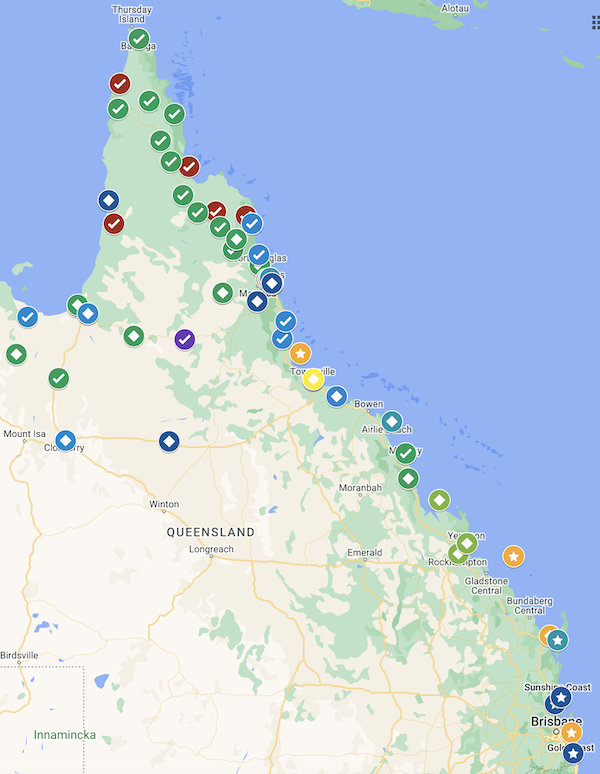
A current map of display locations in Queensland.

K’gari represents the southern limit in QLD for sawfishes confirmed with photographs in the SARA database so far. Image by Veronika Biskis. 

After meeting the Yuwi Rangers in Mackay this November, we were introduced to another location at the Eimeo Hotel, reaching people where sawfishes were historically caught quite frequently. Image by Veronika Biskis

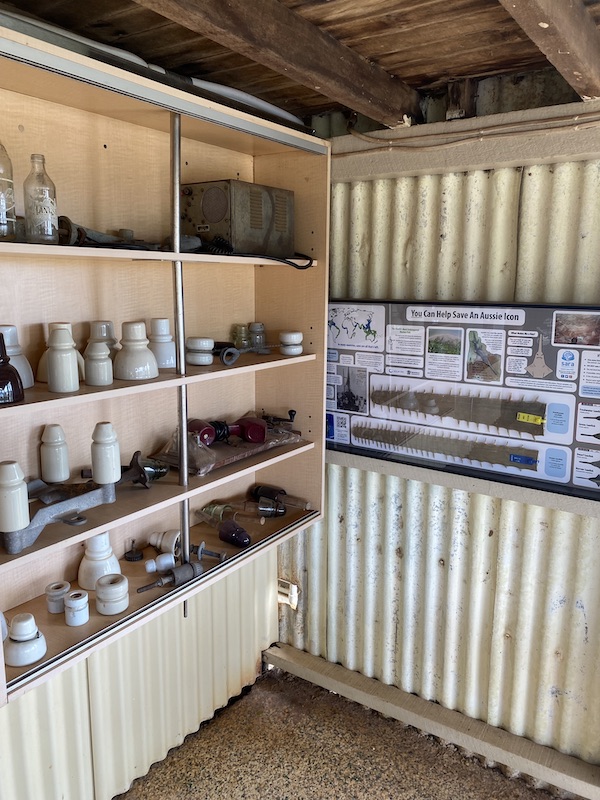
A case in Musgrave Roadhouse, halfway up to the tip to Cape York. This is the only stop for fuel or food for 100 km when traveling north. Image by Veronika Biskis. 

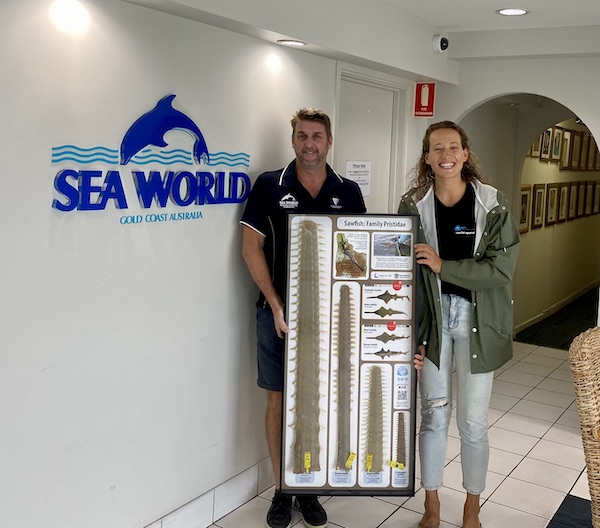
Veronika Biskis and Wayne Phillips, Head of Marine Sciences for Sea World Gold Coast on arrival of their sawfish display case, November 2021.  Funding from the Save Our Seas foundation many deliveries could be made in person, increasing engagement and excitement around receiving each display. Image by Patrick Gallagher

People can submit both current and historic sightings to the SARA website, which has now received over 1200 submissions. This photograph from Toogoom, QLD, 1890 is the oldest on record in Australia.

Veronika Biskis and Dr Barbara Wueringer (SARA) with Sue Marsh (Laura Rangers) hold plush sawfish knitted by someone in the community.

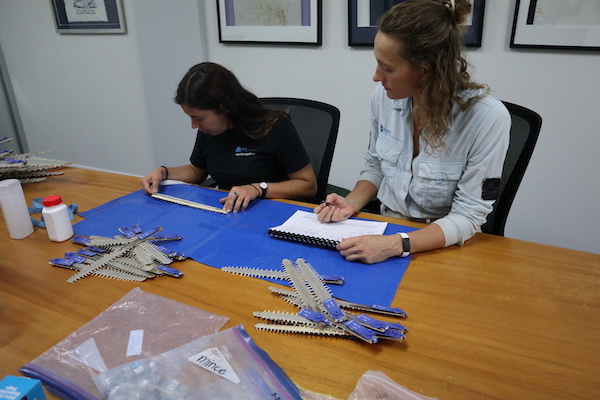
Daniela Matteus-Holland and Veronika Biskis of SARA take measurements from a rostrum in the collection. Measurements are used to estimate total length and age of the animal at death using morphometrics. Image by Russel Hosp

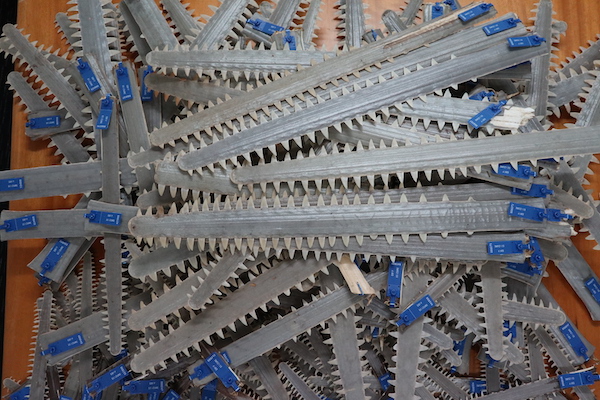
A pile of saws awaiting sampling. Rostra are continuously donated to SARA through a collaboration with Queensland Department of Agriculture and Fisheries.

Interns and volunteers wanted

Sharks And Rays Australia (SARA) is seeking to fill the following positions:

  • One social media intern, to look after our facebook page. You will support our team in science communication. You will help us communicate, our work, what is happening at SARA and news from the world of sharks, rays and above all sawfishes. Start date January 2023.Our social media interns will be responsible for content creation for one of our three platforms (@SharksAndRaysAU on Facebook, Instagram, Twitter), thus supporting our existing science and social media team. Content sourcing, and creating content from existing materials will also fall in the intern’s responsibilities. Creation of ads is outside of the scope of this role.
  • One video editor / content creator. You will help us create informative short videos from clips that we have filmed during our work. Start date January 2023.
  • Two research / conservation volunteers. Start date January 2023. As volunteers, you will help us with various research/ conservation related tasks. The tasks you will be helping with depend on your location. For example, if Cairns-based you will be helping us with DNA sampling of saws, shipments of display cases. If based somewhere else, you will help with online data collection of historic sawfish sightings, and data entry from fieldwork.

Our core values and mission:  At SARA we believe that long-term conservation goals can only be achieved if they are based on sound science, public outreach and an inclusive model of implementation, i.e. working with local stakeholders. SARA aims to not just produce science in the ‘ivory tower’ but to involve the general public in our sawfish and shark research expeditions. In many ways, it is ultimately up to local communities to look after the incredible species that share the natural world with us.

Our current work:  At SARA, we like to think outside the box. Our current main study species, sawfish, are the most endangered of all sharks and rays globally, but they are much more than that. These large animals (up to 7m length) are culturally important to many Indigenous groups, and they were once amongst the most abundant large predators in tropical coastal, inshore and freshwater regions of our planet. Sitting somewhere between charismatic and dangerous megafauna, the work done by our principal scientist, collaborators, students, field assistants, interns, and volunteers ensures that these animals don’t quietly go extinct, and will remain a vital part of Northern Australia’s ecosystems.

Our creative, outcome-oriented, and dynamic work environment allows the creation and implementation of real-world conservation concepts that unite people with a common idea and goal.

  • SARA is currently the only Australian organisation that allows paying field assistants to participate in shark and ray research expeditions, and gain hands-on research experience. Field work is led by our scientists and conducted in close collaboration with Aboriginal Land and Sea Rangers, and sometimes with commercial fishers, thus uniting all of us during intensive tagging workups of large animals.
  • Our citizen science project turns members of the public into sawfish spotters by turning old trophy saws into messengers for conservation. Cases inform the public about sawfish biology, possible threats, and safe release methods. Our sawfish display cases and info boards can be seen at 60 locations (and growing) across Queensland.

Our social media interns will be responsible for content creation for one of our three platforms (@SharksAndRaysAU on Facebook, Instagram, Twitter), thus supporting our existing science and social media team. Content sourcing, and creating content from existing materials will also fall in the intern’s responsibilities. Creation of ads is outside of the scope of this role.

These positions are unpaid, as we currently do not have funding for them. However, in order to gain understanding of the work that we do, you will very likely be able to join one of our field trips in 2023 at a discount (details to be worked out individually). Your internship will also result in a letter of recommendation from our Principal Scientist and Director. Additional perks include: SARA merchandise and opportunity to travel to sharky events.

If interested please send a cover letter and CV to hello@saw.fish attn: Dr Barbara Wueringer. The cover letter should contain the following information:

  • Statement of interest: Why are you interested in this position?
  • Which intern position you are interested in
  • Availability (e.g. one semester, 1 year)
  • Number of hours per week you would like to commit to
  • Where you are based
  • Social media intern only: Your strategy to find info for creating exciting posts. 2-3 sample posts

Please note that where you are based will not affect our decision.